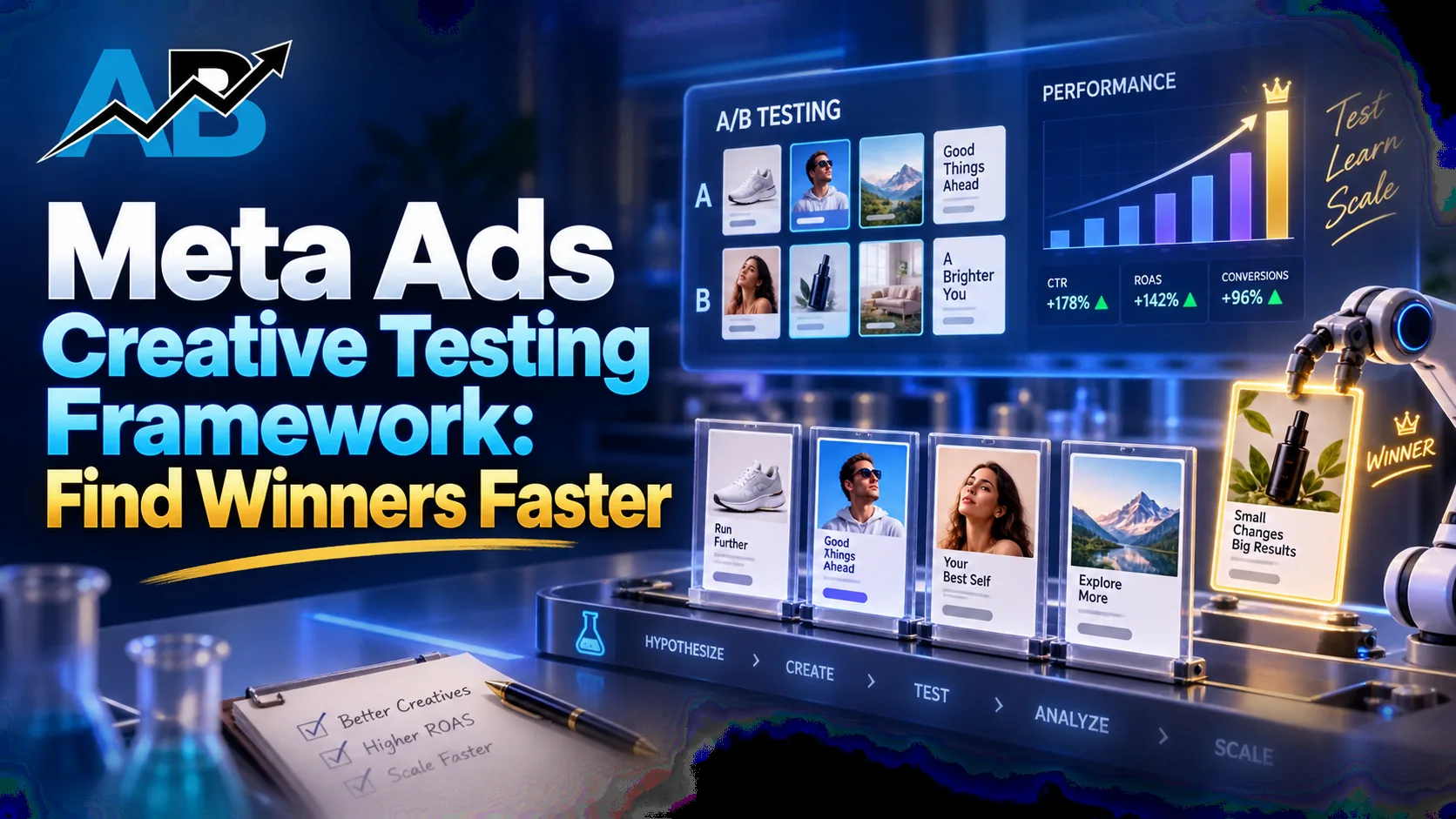
A strong Meta Ads creative testing framework turns scattered activity into a repeatable system. This practical guide focuses on the decisions, checks, and measurements that create useful business outcomes.
Define the Testing Question
Every test needs one clear question: which hook earns attention, which proof builds trust, or which offer drives action? If too many elements change at once, you learn very little even when performance improves.
Build Creative Concepts Before Variations
A concept is the central sales idea, such as a problem demonstration, customer story, comparison, or founder explanation. Test distinct concepts first, then create variations of the winners.
Control the Variables
Keep audience, optimization event, placement strategy, landing page, and measurement window consistent. Change the intended creative variable and document it. This makes the result easier to attribute and repeat.
Create a Balanced Test Matrix
Combine several hooks, formats, and proof types without producing every possible combination. A practical matrix might test three concepts with two executions each, giving the system variety while keeping analysis manageable.
Choose Decision Metrics by Funnel Stage
Use thumb-stop and hold signals to diagnose attention, click quality to evaluate interest, and conversion cost or return to judge commercial performance. No single metric tells the whole story.
Set a Fair Decision Window
Avoid killing an ad after a few expensive impressions. Set minimum spend, conversion, or reach thresholds based on normal account economics. Compare creatives over the same attribution and reporting window.
Iterate on Winners Systematically
When a concept wins, preserve the core idea and vary the first three seconds, headline, creator, length, visual framing, or call to action. Iteration usually produces more reliable gains than constant reinvention.
Document and Scale the Learning
Record the hypothesis, assets, spend, audience, result, and next action in a simple testing log. Read the Meta Ads performance guide and Meta’s official advertising resources, then scale proven concepts gradually.