A strong AI for content marketing turns scattered activity into a repeatable system. This practical guide focuses on the decisions, checks, and measurements that create useful business outcomes.
Give AI a Clear Editorial Brief
Provide the audience, search intent, business goal, tone, evidence, point of view, and desired action. A vague prompt produces generic copy; a thoughtful brief gives the model useful boundaries.
Use AI for Structure, Not Authority
AI is excellent for outlines, question lists, content gaps, alternative hooks, and repurposing. Your subject knowledge should determine the claims, recommendations, examples, and final judgment.
Add First-Hand Experience
Include decisions you made, mistakes you observed, real constraints, screenshots, original data, and specific examples. These details make content credible and difficult to imitate.
Create a Brand Voice Checklist
Define preferred sentence length, vocabulary, level of formality, phrases to avoid, and how you explain complex ideas. Review every draft against this checklist instead of asking for a vague “human tone.”
Fact-Check Every Important Claim
Verify statistics, product features, dates, quotations, and legal or financial statements with primary sources. Remove invented citations and qualify uncertainty rather than presenting guesses as facts.
Edit for Rhythm and Specificity
Delete repetitive introductions, empty transitions, exaggerated adjectives, and conclusions that simply restate the article. Replace general advice with concrete steps, thresholds, examples, and tradeoffs.
Match Content to Search Intent
Study the question behind the query and build the most useful format: guide, comparison, checklist, case study, or definition. Use natural keywords, helpful headings, and descriptive links rather than forced repetition.
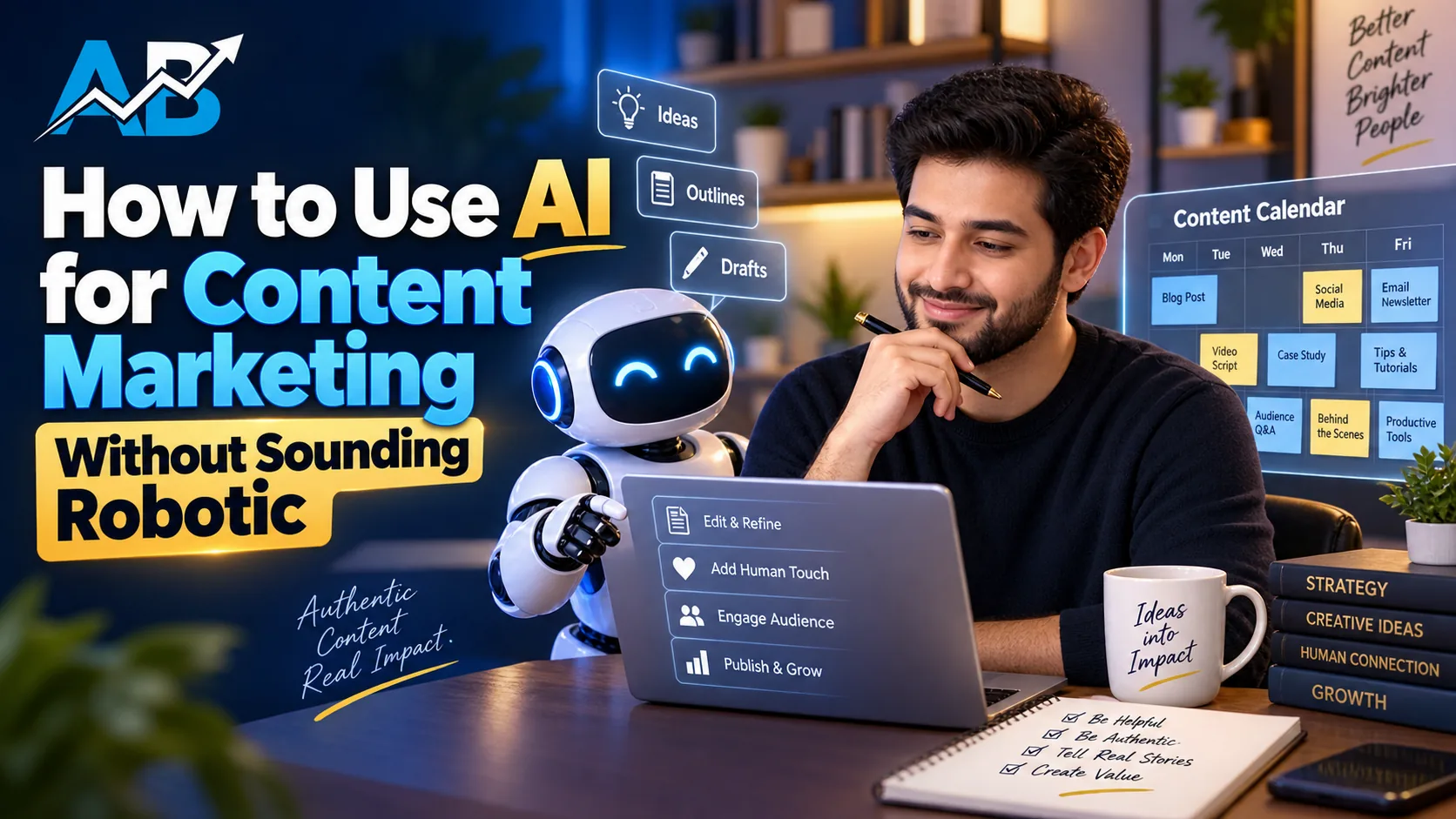
Use a Human-in-the-Loop Workflow
Let AI assist research planning, outlining, first drafts, and repurposing; require human review for accuracy, originality, tone, and publication. See more digital growth articles and Google’s official guidance on generative AI content.