
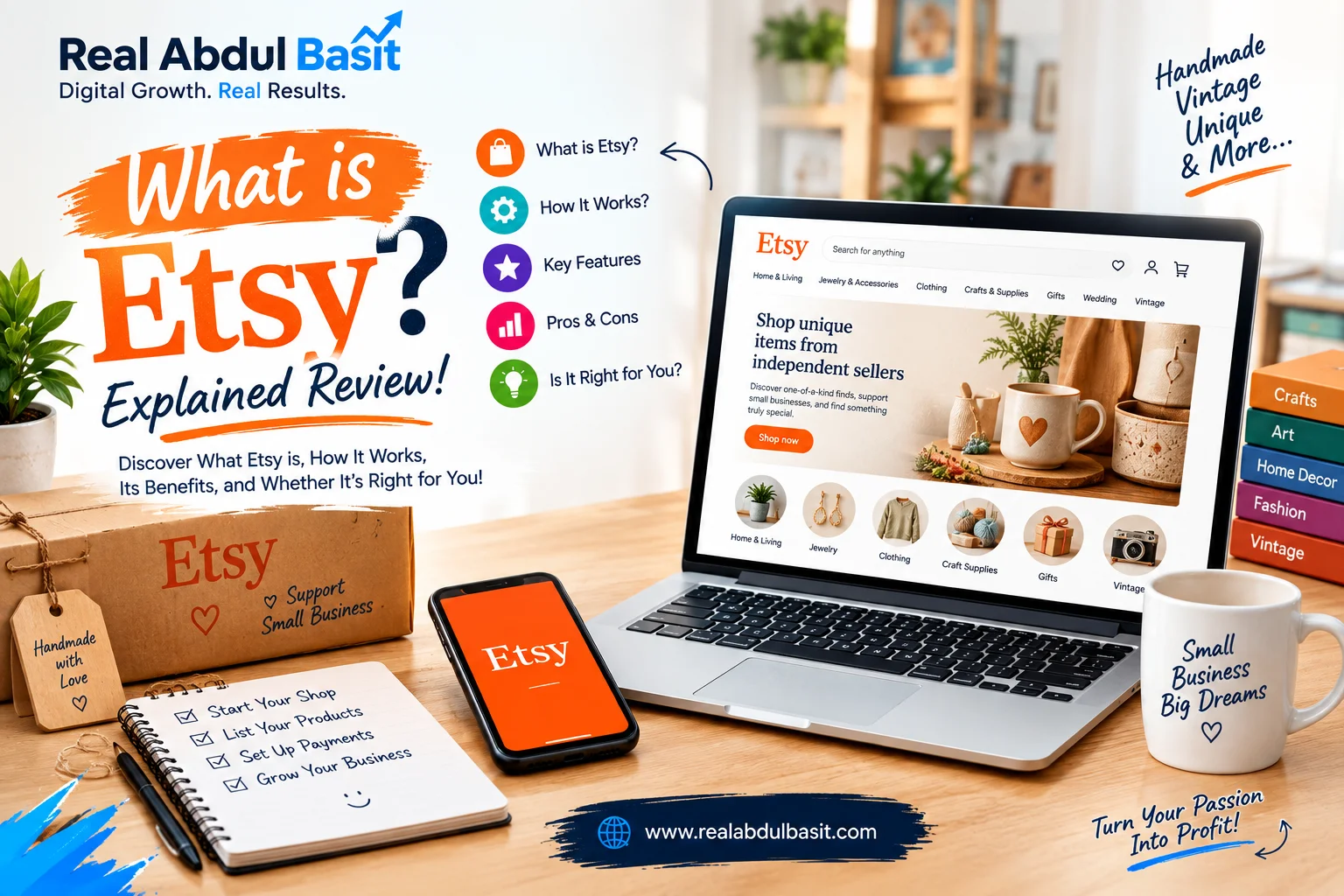
What is Etsy? Etsy is a global online marketplace best known for handmade goods, vintage items, personalized products, craft supplies, and creative digital downloads. It connects independent sellers with shoppers who want items that feel original rather than mass-produced. This detailed Etsy review explains how the platform works, what it costs, its advantages and disadvantages, and whether it is right for buyers or aspiring sellers.
What Is Etsy?
Etsy is an e-commerce marketplace where individuals and small businesses can open their own shops and sell eligible products. Unlike a traditional retailer, Etsy usually does not own the inventory. Sellers create listings, set prices, manage orders, and communicate with customers, while Etsy provides the marketplace, search system, payment tools, advertising options, and buyer-protection framework.
The platform is especially associated with creativity and customization. A shopper might use Etsy to order an engraved wedding gift, a hand-thrown ceramic mug, a restored vintage jacket, a printable planner, or materials for a craft project. This specialist positioning is the main reason Etsy feels different from broad marketplaces.
How Does Etsy Work?
For buyers, Etsy works much like other online shopping sites. You search or browse categories, compare listings, read shop policies and reviews, choose options such as size or personalization, and complete payment at checkout. Because products come from independent shops, processing times, shipping methods, return policies, and product quality can vary.
For sellers, selling on Etsy begins with creating an account and opening a shop. The seller chooses a shop name, adds product photos and descriptions, sets pricing and delivery details, and publishes listings. Etsy can bring marketplace traffic, but each seller remains responsible for product quality, accurate information, customer service, and fulfillment.
What Can You Buy on Etsy?
Etsy focuses on several broad types of products:
- Handmade products: jewelry, artwork, clothing, candles, home décor, accessories, and gifts made or designed by the seller.
- Personalized products: engraved, printed, embroidered, or otherwise customized items.
- Vintage goods: eligible older clothing, collectibles, furniture, décor, and accessories.
- Craft supplies: fabrics, beads, tools, patterns, blanks, and components used by makers.
- Digital products: templates, invitations, printable wall art, planners, patterns, fonts, and other downloadable files.
Buyers should read the full listing carefully. Similar-looking products may differ in material, dimensions, production method, delivery time, or licensing rights.
How Buying on Etsy Works
Start with a specific search phrase, then use filters for price, delivery location, estimated arrival, item type, and other relevant options. Open several listings and compare the complete cost rather than the product price alone. Shipping, taxes, customization, and currency conversion can affect the final total.
Review product photos, dimensions, materials, processing time, returns, and recent customer feedback. If anything is unclear, message the seller before ordering. For customized work, confirm spelling, dates, colors, and measurements in writing. Keeping communication and payment on the platform gives both parties a clearer transaction record.
How Selling on Etsy Works
An Etsy shop is easy to create, but building a profitable one requires careful planning. Choose a focused niche with clear demand and a product you can produce or source consistently. Successful sellers usually treat every listing as a focused landing page: a clear title, accurate attributes, persuasive description, strong photography, transparent delivery information, and relevant search terms.
Search visibility is influenced by relevance, listing quality, customer experience, and competition. Use natural phrases that describe what the product is, who it is for, and the occasion or problem it serves. Avoid repeating unrelated keywords. Strong conversion, reliable fulfillment, and helpful reviews can be more valuable than simply adding more listings.
Etsy Fees Explained
Etsy fees may include listing fees, transaction fees, payment-processing charges, advertising costs, currency-conversion charges, and other location-dependent expenses. The exact structure can change and may differ by country, so sellers should review Etsy’s current official fee information before setting prices.
Calculate profit after materials, packaging, labor, marketplace fees, advertising, returns, and shipping support. A product with healthy revenue can still be unprofitable if time and fulfillment costs are ignored. Build a simple cost sheet for every item and leave room for discounts or unexpected expenses.
Key Features of Etsy
- Marketplace search: helps buyers discover products from many independent shops.
- Shop pages: allow sellers to present branding, policies, announcements, and product collections.
- Reviews: give shoppers social proof based on completed purchases.
- Messaging: supports questions, customization details, and order communication.
- Payment tools: provide a structured checkout experience where available.
- Seller analytics: show visits, orders, revenue, and traffic sources.
- Advertising options: help eligible listings gain additional visibility.
- Digital delivery: enables sellers to offer downloadable products without physical shipping.
Advantages of Etsy
The biggest advantage is access to an audience already interested in creative, unusual, personalized, or vintage products. A new seller does not need to build every part of an online store from scratch. Etsy supplies listing tools, search, checkout, reviews, and an established shopping environment.
For buyers, the platform offers variety and direct access to independent businesses. Many sellers accept customization, which makes Etsy useful for weddings, birthdays, home décor, branded gifts, and meaningful keepsakes. Reviews and seller profiles also make it easier to compare shops.
Disadvantages of Etsy
Competition is high in popular categories, and sellers do not fully control marketplace algorithms, policies, or fees. Shop owners may need excellent photography, distinctive products, competitive delivery, and consistent customer service to stand out. Depending entirely on Etsy traffic also creates platform risk.
For buyers, quality and delivery can vary between shops. Product photos may not always communicate scale or material accurately, and customized goods may have restricted return options. Careful research is therefore essential.
Is Etsy Legit and Safe?
Is Etsy legit? Yes, Etsy is an established marketplace, but each transaction is fulfilled by an independent seller. Safety depends partly on checking the listing and shop. Look for detailed descriptions, realistic photos, recent reviews, clear policies, and a consistent sales history.
Use Etsy’s checkout and messaging systems rather than moving payment or communication off-platform. Be cautious of prices that appear unrealistic, requests for unusual payment methods, copied photographs, or vague shipping information. If an order has a problem, contact the seller promptly and follow the platform’s current help and case procedures.
Etsy vs Amazon and eBay
Etsy, Amazon, and eBay serve overlapping but different buying intentions. Amazon emphasizes broad selection, convenience, and fast fulfillment. eBay is strong in resale, auctions, collectibles, and many general product categories. Etsy is more focused on handmade, designed, personalized, vintage, and craft-related goods.
The best option depends on the product and customer. A highly customized wedding sign naturally fits Etsy, while a standardized everyday product may have stronger demand on Amazon. Rare secondhand collectibles may suit eBay. Some businesses use more than one channel, but each requires platform-specific listings, pricing, and operations.
Is Etsy Good for Beginners?
Etsy for beginners can be attractive because the technical setup is relatively simple and a marketplace audience already exists. However, easy setup does not guarantee sales. Beginners need a defined customer, validated product idea, reliable production plan, accurate pricing, and professional presentation.
Start with a small, coherent collection and improve it using real customer questions and performance data. Learn product photography, keyword research, conversion-focused writing, and customer service. Expand only after you understand which products generate both demand and profit.
Practical Tips for Etsy Buyers
- Read the complete listing, not only the headline and first image.
- Check dimensions, materials, processing time, and estimated delivery.
- Review recent feedback and customer photographs.
- Confirm customization details before production begins.
- Compare the total price, including shipping and taxes.
- Keep payment and communication within Etsy.
Practical Tips for Etsy Sellers
- Choose a clear niche and solve a specific customer need.
- Use original, well-lit images that show scale and important details.
- Write accurate titles and descriptions around buyer intent.
- Price for materials, labor, fees, marketing, and profit.
- Set realistic processing times and communicate delays early.
- Invite honest reviews through excellent service, never manipulation.
- Track views, conversion rate, average order value, and profit.
- Build an email list or independent brand presence where permitted.
Etsy Review: Final Verdict
Our balanced Etsy review is that the marketplace is highly useful for discovering and selling distinctive creative products, but results depend on the individual shop and its execution. Buyers gain access to unique items and personalization. Sellers gain an established marketplace and convenient tools, while accepting competition, fees, and limited platform control.
Etsy is a strong choice when product originality, story, craftsmanship, or customization matters. It is less suitable for sellers offering undifferentiated mass-market goods without a clear creative angle.
Frequently Asked Questions
Is Etsy only for handmade products?
Etsy is known for handmade and seller-designed goods, but it also supports eligible vintage products, craft supplies, and digital downloads. Sellers should review the latest marketplace rules for their exact product.
Can anyone sell on Etsy?
People in supported locations can generally apply to open a shop, subject to identity, payment, product, and policy requirements.
Does Etsy handle shipping?
Sellers normally manage packaging and fulfillment. Etsy may provide shipping-label tools in supported markets, but the seller remains responsible for accurate delivery promises.
Is Etsy expensive for sellers?
Costs depend on listing volume, sales value, payment processing, advertising, location, and operating expenses. Profit should be calculated product by product.
Can selling on Etsy be profitable?
Yes, it can be profitable when demand, differentiation, pricing, production efficiency, and marketing work together. Revenue alone is not proof of profit.
Final Thoughts
Understanding what Etsy is helps you use it with realistic expectations. Buyers should compare shops and confirm important details. Sellers should validate demand, calculate true costs, create excellent listings, and build a memorable customer experience. Used strategically, Etsy can be a valuable marketplace for creative commerce.


