Dropshipping with Alibaba and Shopify lets a US retailer sell products through a Shopify store while a supplier stores, packs, and ships each order. It can lower upfront inventory risk, but the merchant still owns the customer relationship, product claims, shipping promises, refunds, and compliance. This practical guide explains how to test the model responsibly.
What Is Alibaba and Shopify Dropshipping?
Shopify is your storefront. Alibaba.com is a business-to-business marketplace for manufacturers and trading companies. After a customer orders, you pay an approved supplier to ship the product. Alibaba is mainly wholesale, so confirm that a supplier supports single-order, blind dropshipping before listing anything.
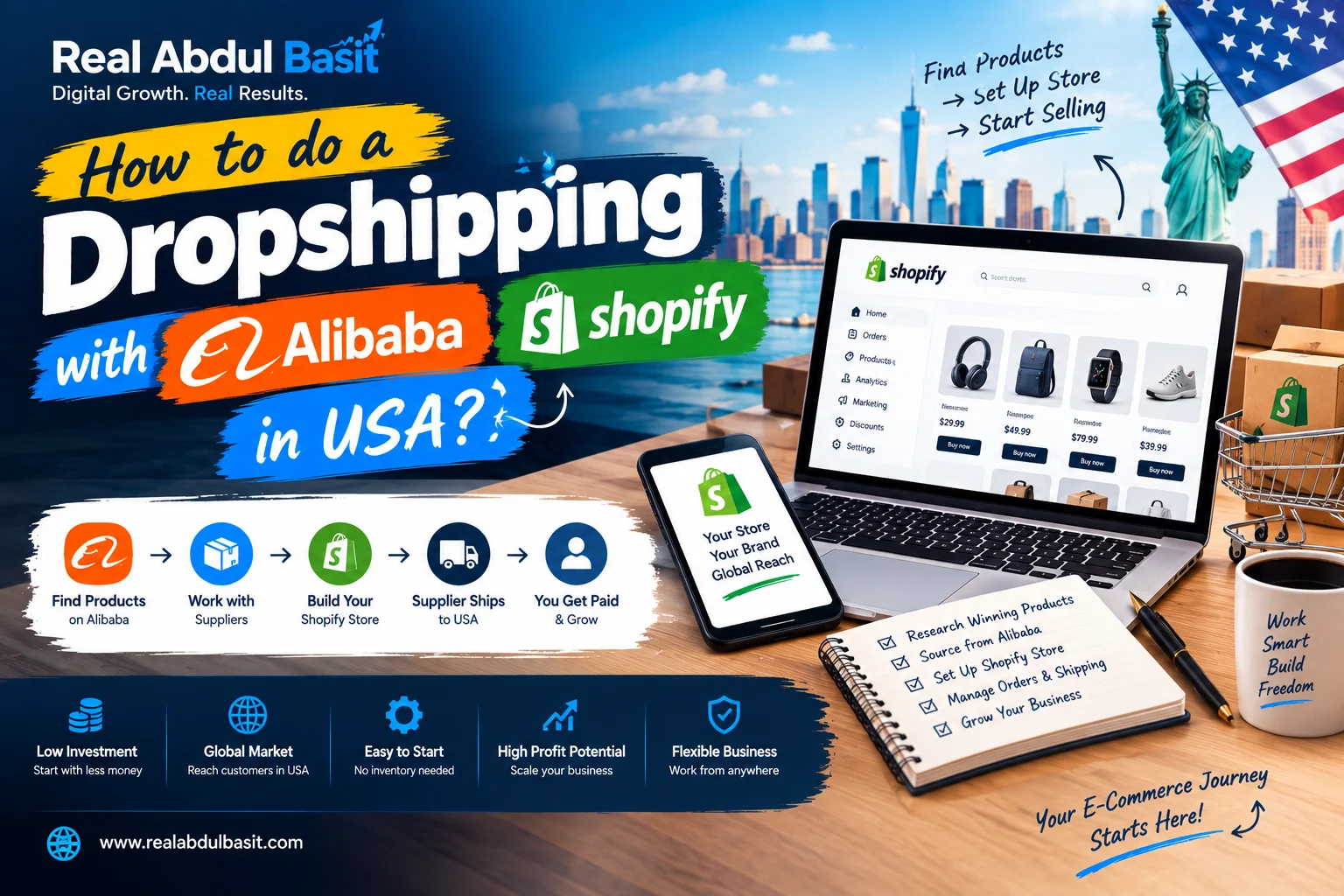
How the Business Model Works
- The customer orders and pays on Shopify.
- The order goes to you, an app, or a fulfillment system.
- You pay the supplier for the product and shipping.
- The supplier sends the parcel and tracking.
- You manage support, refunds, and disputes.
Your real margin must include the product, freight, payment fees, Shopify costs, advertising, duties, returns, apps, taxes, and chargebacks.
Alibaba vs. AliExpress
AliExpress is often easier for one-by-one consumer orders. Alibaba is usually better for negotiated prices, custom packaging, private labeling, and factory relationships. It may offer stronger long-term margins, but minimum quantities and production lead times can be more demanding.
Step 1: Choose a Focused Niche
Start with a customer problem, not a random trending product. Look for useful, demonstrable items that are economical to ship and hard to break. Avoid regulated categories such as supplements, children’s products, medical devices, and batteries until you understand testing, labeling, and shipping rules.
Step 2: Validate Demand
Study Google Trends, marketplace reviews, social content, competitor stores, and search suggestions. Read negative reviews to find common problems you can solve. Strong validation comes from customer action: a small landing-page test, legitimate email sign-ups, or a limited first batch.
Step 3: Find Dropshipping Suppliers
Search Alibaba using the product name plus terms such as “dropshipping,” “single-piece fulfillment,” or “US warehouse.” Compare several suppliers by response quality, years in business, production capability, export history, certifications, and transaction protection. Use platform communication and eligible Trade Assurance protection.
Step 4: Verify the Supplier
Request the legal company name, business license, factory video, product reports, references, lead times, and quality-control process. Put specifications, materials, packaging, shipping commitments, and defect remedies in writing. Pressure to pay outside the platform, prices far below market, or refusal to send samples are warning signs.
Questions to Ask
- Do you ship single orders to US customers?
- Can you ship without supplier invoices or branding?
- What are the processing and delivery times?
- Is tracking provided for every parcel?
- Who pays for defects, losses, or late delivery?
- Can you provide inventory updates?
- Are duties prepaid or collected on arrival?
Step 5: Order Samples
Ship samples to a US address and inspect quality, packaging, labels, tracking, delivery time, and the unboxing experience. Use original photos and video instead of copying generic supplier assets. Test more than one supplier when possible.
Step 6: Calculate Landed Cost
Build a spreadsheet covering the product, packaging, freight, customs, insurance, payments, Shopify, apps, marketing, refunds, replacements, and support. A $12 item with $8 shipping is not a $20 cost if ads, fees, and returns add another $15. Price from the full economic picture.
Step 7: Build a Trustworthy Shopify Store
Use a mobile-friendly theme and create About, Contact, Shipping, Returns, Privacy, Terms, and FAQ pages. Show realistic delivery estimates and a working support address. Test checkout, taxes, emails, and navigation before sending traffic.
This guide to starting on Amazon also explains product selection, listings, fulfillment choices, and seller responsibilities.
Step 8: Create Product Pages That Convert
Write original, accurate descriptions with dimensions, materials, instructions, what is included, and clear shipping and return details. Use photos from your samples. Never copy exaggerated claims or display fake reviews.
Step 9: Connect Orders Carefully
Some suppliers support Shopify apps, APIs, spreadsheets, or fulfillment agents. Test how variants, addresses, inventory, tracking, cancellations, and personal data are handled. Review early orders manually because a wrong mapping can create many failures quickly.
Step 10: Plan US Shipping
Publish delivery estimates based on real test shipments. Separate processing time from transit time. Compare express, postal, air, and US-warehouse options. Decide who is the importer of record and whether duties are prepaid. At higher volume, bulk importing to a US third-party warehouse can improve speed.
Returns and Customer Support
The customer bought from you, not the factory. Keep funds available for refunds, reply quickly, and agree with the supplier on defect evidence, return addresses, and reimbursement timelines. Track late-delivery, damage, refund, and chargeback rates by supplier.
US Sales Tax and Compliance
Sales-tax duties depend on nexus, customer location, supplier location, registration, and product taxability. Shopify can help calculate tax, but the merchant is responsible for correct settings, filings, and payments. Consult a qualified US tax professional.
You are also responsible for truthful advertising, privacy, intellectual property, product safety, warnings, and applicable federal and state rules. Never sell counterfeit goods. Consider product-liability insurance as the business grows.
Marketing Your Store
Combine SEO content, short video, creators, email, retargeting, and paid acquisition. Demonstrate the real product and lead with the customer problem. Test small budgets and scale only when contribution margin remains positive after refunds. These Meta Ads optimization strategies can help with responsible paid-social testing.
Common Mistakes
- Choosing products only because they look viral.
- Skipping samples and supplier checks.
- Ignoring total costs and return rates.
- Promising unrealistic delivery times.
- Relying on one supplier without backup.
- Ignoring tax, safety, privacy, or trademark rules.
Is It Profitable?
It can be profitable with a differentiated offer, reliable fulfillment, disciplined acquisition costs, and enough margin for support and refunds. It is less attractive when the product is widely available or slow delivery and advertising consume the margin. Treat the first stage as validation, not guaranteed income.
Frequently Asked Questions
Can Alibaba connect directly to Shopify?
Some suppliers and tools support integrations, but capabilities vary. Verify inventory, routing, tracking, and returns before automating.
Do I need inventory?
Not for true per-order dropshipping, but some Alibaba suppliers require minimum quantities. A small batch or US fulfillment partner may work better.
Is dropshipping legal in the USA?
The model is generally legal, but sellers must comply with tax, consumer-protection, privacy, advertising, product-safety, and intellectual-property laws.
Final Thoughts
A durable Alibaba Shopify dropshipping business in the USA is built like a real retail brand: tested products, verified suppliers, transparent policies, reliable shipping, compliant operations, and responsive support. Start focused, measure every cost, and improve the customer experience before scaling.