A lot of Amazon sellers focus only on products.
They search for:
- trending items
- high-demand niches
- low-competition opportunities
Then they launch generic listings and hope sales happen.
Sometimes it works temporarily.
However, long-term success on Amazon usually comes from something much bigger:
Building a real brand.
In 2026, Amazon is becoming more competitive every year.
Because of that, generic selling is getting harder.
Customers now pay more attention to:
- trust
- quality
- branding
- customer experience
- emotional connection
That shift is changing how successful Amazon businesses grow.
The sellers winning long term are usually not just selling products.
They are building brands customers remember.
In this article, I’ll explain how to build a profitable Amazon brand instead of running a weak “one-product business” that struggles to survive competition.
Why Generic Amazon Selling Is Becoming Harder
Years ago, many sellers succeeded with:
- copied products
- weak branding
- basic listings
- aggressive PPC
The marketplace was less crowded.
Today, thousands of sellers use similar strategies.
That creates:
- price wars
- shrinking margins
- low customer loyalty
- weak differentiation
As competition grows, branding becomes more important.
What Makes a Real Amazon Brand Different
A product is something people buy once.
A brand is something people remember.
That difference matters.
Strong brands create:
- trust
- recognition
- repeat customers
- higher perceived value
This makes growth much more sustainable.
Customers Buy Emotionally
Many beginners think Amazon is only about:
- keywords
- PPC
- rankings
Those things matter.
However, customer psychology matters too.
People often buy products because they feel:
- trustworthy
- premium
- reliable
- emotionally appealing
Strong branding influences those emotions heavily.
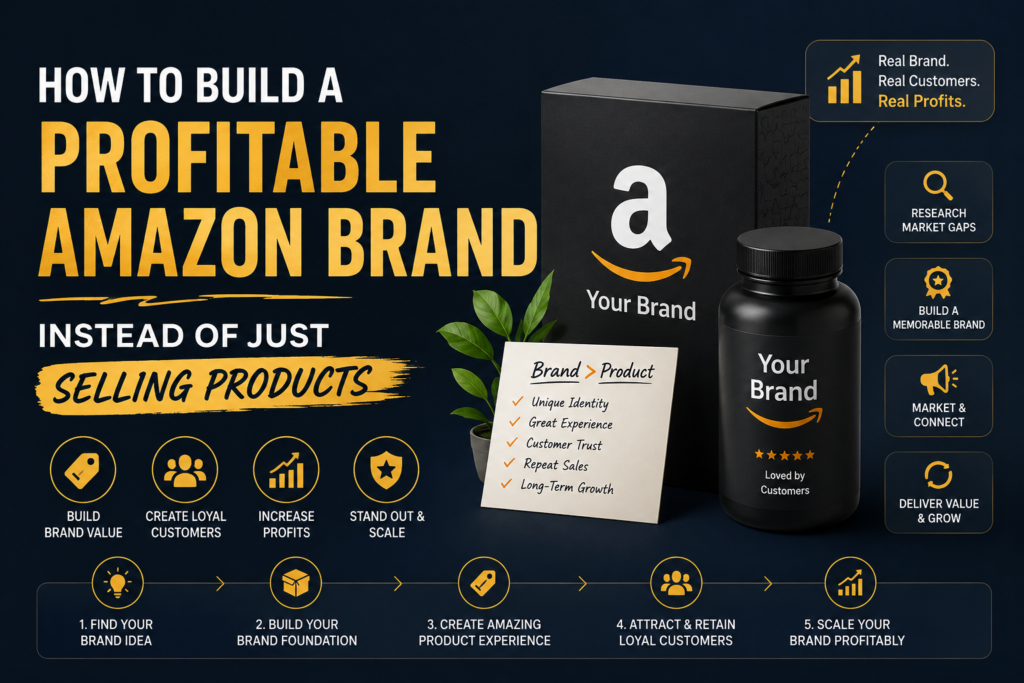
Step 1 — Build a Clear Brand Identity
Your brand should stand for something.
Many Amazon sellers fail because their products feel:
- random
- generic
- forgettable
Customers rarely stay loyal to generic businesses.
What Strong Brand Identity Includes
A strong brand usually has:
- a clear target audience
- consistent visual identity
- recognizable messaging
- unique positioning
- emotional appeal
Everything should feel connected.
Why Positioning Matters So Much
Positioning answers an important question:
Why should customers choose your brand instead of competitors?
Without strong positioning, your business usually competes only on price.
That becomes dangerous long term.
Step 2 — Understand Your Customers Deeply
The best Amazon brands understand:
- customer frustrations
- buying motivations
- emotional triggers
- lifestyle preferences
- product expectations
This understanding improves:
- listings
- branding
- advertising
- product development
Customer insight is one of the biggest competitive advantages online.
Reviews Are Market Research
Customer reviews contain valuable information.
Strong brands constantly study reviews to identify:
- repeated complaints
- improvement opportunities
- emotional buying patterns
- feature requests
This helps improve both:
- products
- customer experience
Step 3 — Create Better Product Listings
Your listing is part of your branding.
Weak listings damage trust quickly.
Strong listings improve:
- conversion rates
- click-through rates
- perceived value
That also supports better Amazon SEO performance.
What Strong Listings Usually Include
Good Amazon listings typically have:
- clear titles
- strong product images
- benefit-focused bullet points
- emotional messaging
- optimized keywords
Everything should feel professional and trustworthy.
Why Product Images Matter So Much
Images directly influence:
- clicks
- conversions
- customer trust
Generic images often create weak performance.
Strong brands invest heavily in visual presentation because perception matters.
Step 4 — Focus on Customer Experience
Many sellers only focus on acquiring sales.
Strong brands focus on customer satisfaction too.
Why?
Because happy customers create:
- better reviews
- repeat purchases
- stronger rankings
- word-of-mouth growth
Customer experience compounds over time.
What Improves Customer Experience
This may include:
- better packaging
- clearer instructions
- product quality
- fast support
- consistent branding
Small improvements create stronger customer loyalty.
Step 5 — Build Customer Loyalty
Repeat customers are extremely valuable.
They reduce:
- advertising costs
- customer acquisition pressure
- dependency on constant launches
Strong brands build loyalty intentionally.
Why Loyalty Matters on Amazon
Amazon competition increases constantly.
If customers remember your brand positively, they are more likely to:
- buy again
- search your brand directly
- trust future launches
That creates long-term stability.
Step 6 — Expand Products Strategically
Many successful Amazon brands scale by expanding around one audience.
Instead of selling random products, they create:
- complementary items
- product ecosystems
- repeat purchase opportunities
This increases:
- average customer value
- brand recognition
- business scalability
Example of Smart Expansion
Instead of launching unrelated products, a fitness brand may expand into:
- gym accessories
- hydration products
- recovery tools
- workout essentials
Everything supports the same audience identity.
Step 7 — Use Amazon SEO Properly
Branding alone is not enough.
Visibility still matters.
Amazon SEO helps customers discover your products organically.
Strong SEO improves:
- rankings
- traffic
- long-term sales consistency
What Helps Amazon Rankings
Amazon rewards products that:
- convert well
- satisfy customers
- maintain strong sales velocity
- receive positive engagement
That means branding and SEO actually support each other.
Organic Ranking Reduces PPC Dependence
Strong organic visibility helps:
- improve profit margins
- lower advertising pressure
- stabilize sales
That is why long-term Amazon brands focus heavily on both:
- SEO
- conversion optimization
Step 8 — Build External Traffic Sources
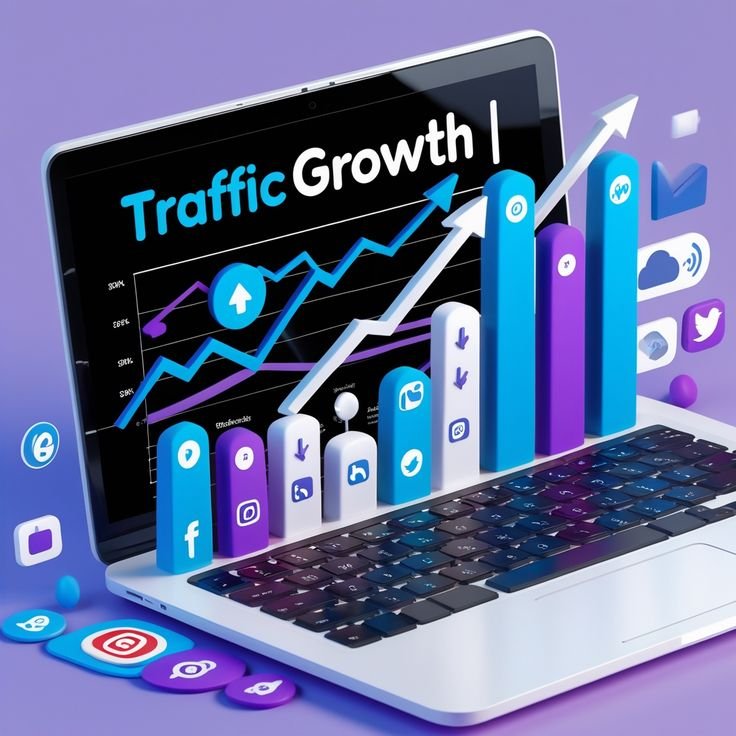
One of the smartest things Amazon brands can do today is build audiences outside Amazon.
This includes:
- TikTok
- YouTube
- blogs
- email lists
External traffic creates additional leverage.
Why External Traffic Matters
It helps brands:
- reduce PPC dependence
- improve launches
- strengthen customer relationships
- increase visibility
Audience ownership is becoming more valuable every year.
Step 9 — Use AI Strategically
AI tools are helping Amazon brands:
- analyze reviews
- optimize PPC
- improve keyword research
- organize analytics
- speed up workflows
However, AI should support strategy.
Not replace it.
Why Human Branding Still Matters
AI can automate many processes.
But customers still connect with:
- trust
- emotion
- storytelling
- brand identity
That human side creates loyalty.
And loyalty builds stronger businesses.
Common Branding Mistakes Amazon Sellers Make
1. Selling Random Products
Weak focus creates weak brand identity.
2. Ignoring Customer Experience
Poor experiences destroy long-term trust.
3. Depending Completely on PPC
Without branding, advertising becomes expensive.
4. Copying Competitors
Copied brands rarely become memorable.
5. Focusing Only on Short-Term Sales
Strong brands think long term.
What Actually Works in 2026
The Amazon brands growing strongest today usually combine:
- branding
- customer understanding
- Amazon SEO
- strategic PPC
- strong visuals
- repeat purchase systems
- external traffic
Everything works together.
That creates sustainable growth.
Helpful Resources for Amazon Sellers
You can learn more about Amazon branding and eCommerce growth from:
Studying branding and customer psychology is just as important as learning PPC.
Final Thoughts
The future of Amazon FBA is not about selling random products anymore.
It is about building:
- trusted brands
- loyal audiences
- repeat customers
- strong customer experiences
The sellers who focus only on quick sales will struggle more as competition grows.
However, the sellers building real brands will create businesses with:
- stronger margins
- better customer loyalty
- long-term scalability
And in 2026, branding is becoming one of the biggest competitive advantages Amazon sellers can have.