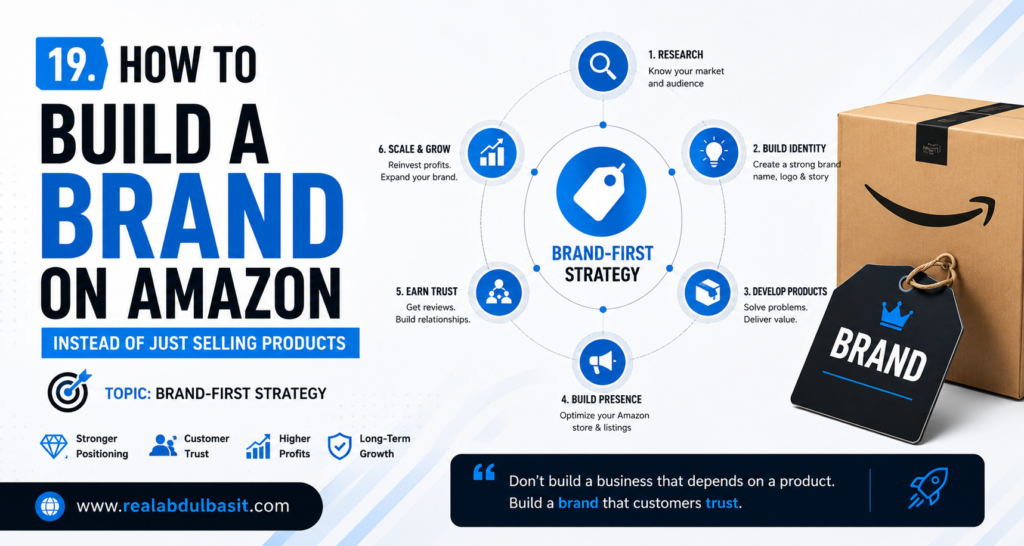
How to Build a Brand on Amazon Instead of Just Selling Products!
One of the biggest mistakes Amazon sellers make is treating Amazon like a product-selling platform instead of a brand-building platform.
Years ago, many sellers could launch a generic product, run some PPC campaigns, and generate consistent sales.
Today, things are different.
Competition is higher.
Advertising costs are increasing.
Customers have more options than ever before.
As a result, simply selling products is no longer enough for long-term success.
The sellers building sustainable businesses are focused on something bigger:
Building a brand.
A strong Amazon brand creates trust, increases customer loyalty, improves conversion rates, and makes it easier to launch new products.
In this guide, I’ll explain the exact brand-first strategy that successful Amazon businesses use to grow beyond individual product sales.
Why Most Amazon Sellers Struggle Long Term
Many new sellers focus entirely on:
- Finding winning products
- Running PPC campaigns
- Increasing sales volume
- Chasing trends
While these activities matter, they often create short-term businesses.
When competition enters the market, profits shrink.
When advertising costs increase, margins suffer.
Without a strong brand, customers have little reason to choose your products over competitors.
This creates a constant battle for visibility and sales.
The Difference Between a Product and a Brand
A product solves a problem.
A brand creates trust.
This distinction is important.
Products can be copied.
Brands are much harder to replicate.
Customers often forget the product they purchased.
However, they remember the brand behind a positive experience.
That’s why branding matters.
Why Amazon Rewards Strong Brands
Amazon’s algorithm ultimately wants customers to have a good experience.
Strong brands often generate:
- Better conversion rates
- Higher customer satisfaction
- More positive reviews
- Increased repeat purchases
These signals contribute to stronger long-term performance.
In many cases, branding indirectly supports Amazon SEO and organic rankings.
Step 1: Define Your Brand Identity
Before launching additional products, define what your brand stands for.
Ask yourself:
- Who is your ideal customer?
- What problems do you solve?
- What makes your products different?
- What values does your brand represent?
Many sellers skip this step.
As a result, their businesses feel generic.
Strong brands have clear positioning.
Build a Brand Around a Customer, Not a Product
One of the most effective branding strategies is focusing on a customer segment.
For example:
Instead of selling random products, focus on serving:
- Fitness enthusiasts
- Pet owners
- Parents
- Travelers
- Outdoor adventurers
This creates a more cohesive brand experience.
It also makes future product expansion easier.
Step 2: Create Consistent Branding
Consistency builds recognition.
Your brand should maintain consistency across:
- Product packaging
- Listing images
- Logos
- Messaging
- A+ Content
- Storefront design
Customers should instantly recognize your products.
Strong visual consistency creates trust.
Why Packaging Matters More Than Most Sellers Think
Packaging is often overlooked.
However, it plays a major role in customer perception.
Premium packaging can:
- Improve customer experience
- Encourage positive reviews
- Increase perceived value
- Strengthen brand recall
Small details often create memorable experiences.
Step 3: Focus on Customer Experience
Brand building doesn’t end after the sale.
Customer experience is one of the most important aspects of long-term growth.
Great brands consistently deliver:
- Product quality
- Clear instructions
- Reliable performance
- Professional presentation
Satisfied customers are more likely to purchase again.
Customer Experience Drives Reviews
Positive reviews remain one of Amazon’s most powerful ranking signals.
Better customer experiences often lead to:
- Higher ratings
- Increased trust
- Better conversion rates
- Improved organic rankings
Everything is connected.
Step 4: Build Trust Through Content
Trust is one of the strongest competitive advantages in eCommerce.
Many successful brands educate customers through:
- Product guides
- Blog content
- Social media
- Videos
- Tutorials
Helpful content positions your brand as an authority.
Customers are more likely to buy from brands they trust.
Why Personal Branding Can Help
Many modern Amazon businesses also build a personal brand alongside the company.
Customers increasingly trust real people.
Sharing:
- Experiences
- Insights
- Product knowledge
- Educational content
can strengthen overall brand authority.
Step 5: Create a Strong Amazon Storefront
An Amazon Storefront acts as your brand’s home on Amazon.
A well-designed storefront can:
- Increase credibility
- Improve product discovery
- Showcase your brand story
- Support cross-selling opportunities
Many sellers underutilize this valuable asset.
Step 6: Encourage Repeat Purchases
One-time purchases are valuable.
Repeat customers are even better.
Strong brands create systems that encourage repeat business.
This may include:
- Complementary products
- Product bundles
- Brand recognition
- Consistent quality
Repeat customers reduce dependence on constant customer acquisition.
Why Repeat Purchases Matter
Businesses that rely entirely on new customers often face rising advertising costs.
Repeat buyers help improve:
- Profitability
- Customer lifetime value
- Brand stability
Long-term growth becomes easier.
Step 7: Use Amazon PPC to Build Brand Visibility
Many sellers view PPC only as a sales tool.
However, advertising also increases:
- Product visibility
- Brand awareness
- Customer familiarity
When customers repeatedly see your brand, trust often increases.
This can improve both paid and organic performance.
Brand Building and Amazon SEO Work Together
As your brand becomes stronger, several positive effects often occur:
- Better click-through rates
- Higher conversion rates
- Increased branded searches
- More repeat customers
These factors can support organic ranking growth over time.
Step 8: Expand Products Strategically
One of the biggest differences between sellers and brands is product expansion.
Sellers often launch random products.
Brands launch products that serve the same audience.
For example:
A fitness brand may expand into:
- Resistance bands
- Water bottles
- Recovery tools
- Gym accessories
Each product strengthens the overall brand ecosystem.
Why Random Product Expansion Fails
Launching unrelated products often creates:
- Brand confusion
- Weak positioning
- Poor customer retention
Consistency is important.
Every product should reinforce your brand identity.
Common Branding Mistakes Amazon Sellers Make
Competing Only on Price
Price wars destroy margins and weaken brand value.
Selling Random Products
Lack of focus makes branding difficult.
Ignoring Customer Experience
Poor experiences reduce trust and loyalty.
Weak Visual Identity
Inconsistent branding makes recognition harder.
Depending Entirely on PPC
Advertising can generate sales.
Brands generate loyalty.
What Successful Amazon Brands Do Differently
Strong Amazon brands focus on:
- Customer experience
- Product quality
- Brand consistency
- Organic growth
- Long-term strategy
- Repeat purchases
They think beyond individual transactions.
They build relationships.
Related Articles
You may also enjoy:
- How to Build a Profitable Amazon Brand Instead of Just Selling Products
- How to Rank Your Amazon Product Organically Without Spending Too Much on PPC
- The Truth About Amazon FBA in 2026: Is It Still Worth It?
- AI + Amazon FBA: The Growth Strategy I’m Using Right Now
You can also explore our Amazon Growth Consulting and Amazon PPC Management services for additional support.
External Resources
To learn more about brand building, visit:
These resources provide valuable insights into eCommerce growth and branding.
Frequently Asked Questions
Why should I build a brand on Amazon?
A strong brand increases trust, customer loyalty, repeat purchases, and long-term profitability.
Can I build a brand with only one product?
Yes. Many successful brands start with one product and expand strategically over time.
Does branding improve Amazon rankings?
Indirectly, yes. Better branding often improves conversion rates, customer satisfaction, and repeat purchases, which can support stronger rankings.
What is the biggest branding mistake Amazon sellers make?
Selling random products without a clear customer focus is one of the most common mistakes.
Is Amazon Brand Registry worth it?
Yes. Brand Registry provides additional tools, protection, and branding opportunities that can support long-term growth.
Final Verdict
Selling products can generate short-term revenue.
Building a brand creates long-term value.
In today’s competitive Amazon marketplace, the businesses growing fastest are not simply finding winning products.
They are creating memorable brands that customers trust.
By focusing on:
- Customer experience
- Consistent branding
- Strategic product expansion
- Repeat purchases
- Long-term relationships
you can build an Amazon business that is more resilient, more profitable, and easier to scale.
In 2026, the biggest opportunity isn’t just selling products.
It’s building a brand that customers remember.