Amazon Organic Ranking vs Sponsored Ranking Explained!
One of the most common questions Amazon sellers ask is:
“What’s the difference between organic ranking and sponsored ranking?”
Understanding this distinction is critical because both types of rankings play an important role in Amazon growth.
Many beginners focus entirely on sponsored ads.
Others concentrate only on organic rankings.
However, the most successful Amazon brands understand that both work together.
When used correctly, sponsored advertising can help improve visibility, generate sales, and support long-term organic growth.
In this guide, I’ll explain the differences between Amazon organic ranking and sponsored ranking, how each one works, and how they influence each other.
What Is Amazon Organic Ranking?
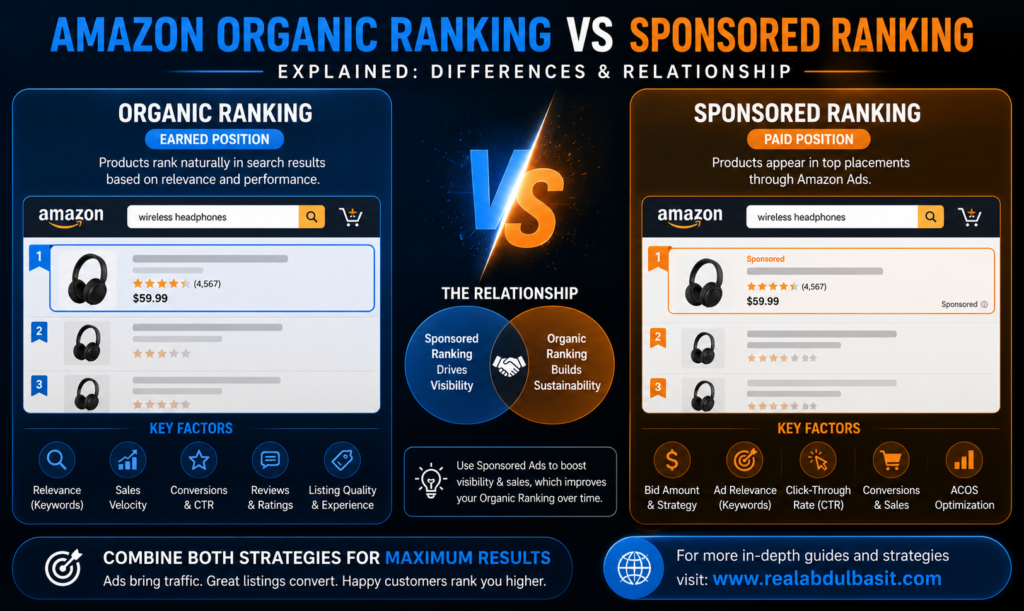
Amazon organic ranking refers to the position your product appears in Amazon search results without paid advertising.
For example, if a customer searches:
“wireless gaming mouse”
and your product appears naturally in the search results without an ad label, that position is your organic ranking.
Organic rankings are earned through performance and relevance rather than advertising spend.
Why Organic Ranking Matters
Organic rankings are valuable because they generate traffic without paying for every click.
Higher organic rankings typically result in:
- More visibility
- More clicks
- More sales
- Better profitability
- Reduced dependence on PPC
This is why many Amazon sellers prioritize organic growth.
What Is Sponsored Ranking?
Sponsored ranking refers to the position your product appears in Amazon search results through paid advertising.
Sponsored listings are usually labeled:
Sponsored
These positions are earned through Amazon PPC campaigns rather than organic performance alone.
Types of Sponsored Ads
Amazon offers several advertising formats, including:
Sponsored Products
The most commonly used ad type.
These ads appear within search results and product pages.
Sponsored Brands
These ads showcase your brand and multiple products.
Sponsored Display
These ads help sellers reach customers both on and off Amazon.
Each format can increase product visibility.
The Main Difference Between Organic and Sponsored Ranking
The easiest way to understand the difference is this:
| Organic Ranking | Sponsored Ranking |
|---|---|
| Earned through performance | Earned through advertising |
| No direct cost per click | Requires ad spend |
| Long-term traffic source | Immediate traffic source |
| Depends on ranking signals | Depends on bids and relevance |
| Sustainable growth | Faster visibility |
Both serve different purposes.
How Organic Ranking Works
Amazon’s algorithm evaluates several factors when determining organic rankings.
These include:
- Keyword relevance
- Conversion rates
- Sales velocity
- Customer reviews
- Inventory availability
- Customer satisfaction
Products that perform well across these areas generally rank higher.
How Sponsored Ranking Works
Sponsored rankings are determined by a combination of:
- Bid amount
- Keyword relevance
- Historical performance
- Conversion rates
- Click-through rates
Higher bids alone do not guarantee top placement.
Amazon still wants ads that generate positive customer experiences.
Can Sponsored Ads Improve Organic Ranking?
This is one of the most debated topics in Amazon advertising.
The short answer is:
Indirectly, yes.
Sponsored ads do not directly increase organic rankings.
However, they often generate:
- More visibility
- More traffic
- More sales
These sales create signals that Amazon uses when evaluating organic rankings.
As a result, PPC can contribute to organic growth.
A Real Example
Imagine two identical products.
Product A
- No advertising
- Few sales
- Limited visibility
Product B
- Active PPC campaigns
- Consistent traffic
- Growing sales velocity
Over time, Product B is more likely to improve its organic rankings because Amazon sees stronger performance signals.
This is why many successful launches rely on PPC.
Why Organic Ranking Is the Long-Term Goal
Advertising can generate immediate visibility.
However, organic rankings create long-term sustainability.
A product ranking highly for important keywords often receives sales without relying entirely on PPC.
Benefits include:
- Lower customer acquisition costs
- Better profitability
- Stronger margins
- Greater stability
This is why organic growth remains important.
Why Sponsored Ranking Still Matters
Some sellers view PPC only as an expense.
That mindset can be limiting.
Sponsored advertising can help:
- Launch new products
- Discover keywords
- Generate sales velocity
- Improve visibility
- Support ranking efforts
When managed correctly, PPC becomes an investment rather than a cost.
Organic Ranking vs Sponsored Ranking During Product Launches
New products face a challenge.
They lack:
- Sales history
- Reviews
- Ranking authority
Without these signals, organic rankings are difficult.
Sponsored advertising helps bridge the gap.
By generating traffic and sales, PPC helps new products gain momentum.
Which Ranking Generates More Sales?
The answer depends on the product and category.
However, many mature products eventually receive the majority of their sales from organic traffic.
Sponsored traffic often plays a supporting role.
This is one reason strong organic rankings are so valuable.
The Relationship Between PPC and Organic Growth
Think of PPC and organic rankings as partners rather than competitors.
PPC helps create:
- Traffic
- Data
- Sales
Organic rankings help create:
- Sustainability
- Profitability
- Long-term growth
Together, they create a balanced Amazon strategy.
Common Seller Mistakes
Depending Only on PPC
Some sellers rely entirely on advertising.
This can become expensive over time.
Ignoring PPC Completely
Others avoid advertising and struggle to generate sales velocity.
This often slows ranking growth.
Chasing Rankings Without Conversions
Traffic alone isn’t enough.
Conversion rates matter.
Focusing Only on Keywords
Keywords are important.
However, customer experience and sales performance are equally critical.
The Best Strategy for 2026
The strongest Amazon growth strategy combines:
Organic Optimization
- Keyword research
- Listing optimization
- Better images
- Strong reviews
- Inventory management
Sponsored Advertising
- Sponsored Products
- Keyword targeting
- Bid optimization
- Search term analysis
This combination creates both short-term and long-term growth.
Organic Ranking Signals Sellers Should Monitor
Pay attention to:
- Keyword positions
- Conversion rates
- Sales velocity
- Review quality
- Inventory levels
These metrics influence organic performance.
Sponsored Ranking Metrics Sellers Should Monitor
Track:
- ACOS
- TACOS
- CTR
- CPC
- Conversion Rate
- ROAS
These metrics help optimize advertising efficiency.
Related Articles
You may also find these guides helpful:
- How Amazon Organic Ranking Works in 2026
- Why Your Amazon Product Is Not Ranking Organically
- TACOS vs ACOS: Which Amazon PPC Metric Actually Matters?
- How to Rank Your Amazon Product Organically Without Spending Too Much on PPC
You can also explore our Amazon PPC Management and Amazon SEO Optimization services.
External Resources
For additional learning, review:
- Amazon Seller University
- Amazon Advertising Learning Center
- Amazon Brand Registry
These official resources provide valuable insights into Amazon growth strategies.
Frequently Asked Questions
What is organic ranking on Amazon?
Organic ranking is the position a product appears in Amazon search results without paid advertising.
What is sponsored ranking on Amazon?
Sponsored ranking refers to ad placements obtained through Amazon PPC campaigns.
Does Amazon PPC improve organic rankings?
Indirectly, yes. PPC can generate traffic and sales that contribute to stronger organic ranking signals.
Which is more important, organic or sponsored ranking?
Both are important. Sponsored rankings provide immediate visibility, while organic rankings support long-term profitability and growth.
Can I rank organically without PPC?
Yes, but it is often more difficult and slower, especially in competitive categories.
Final Verdict
Amazon organic ranking and sponsored ranking serve different purposes.
Organic rankings provide sustainable, long-term traffic.
Sponsored rankings provide immediate visibility and sales opportunities.
The most successful Amazon sellers don’t choose one over the other.
Instead, they use sponsored advertising to accelerate growth while building strong organic rankings for long-term profitability.
In 2026, the best Amazon strategy is not organic versus sponsored.
It’s understanding how both work together to grow your business.