TACoS vs ACoS: Which Amazon Metric Matters More in 2026?
If you’ve been running Amazon PPC campaigns, you’ve probably heard about ACoS and TACoS.
Many sellers focus only on lowering ACoS because it’s the metric Amazon highlights inside the Advertising Console. However, experienced sellers know that ACoS tells only part of the story.
To truly understand whether your advertising is helping your business grow, you also need to track TACoS (Total Advertising Cost of Sales).
So, which metric matters more?
The answer depends on your goals, but for long-term growth, TACoS often provides a much clearer picture of your business.
In this guide, I’ll explain the differences between TACoS and ACoS, show you how to calculate them, and share practical strategies to improve both metrics in 2026.
What Is ACoS?
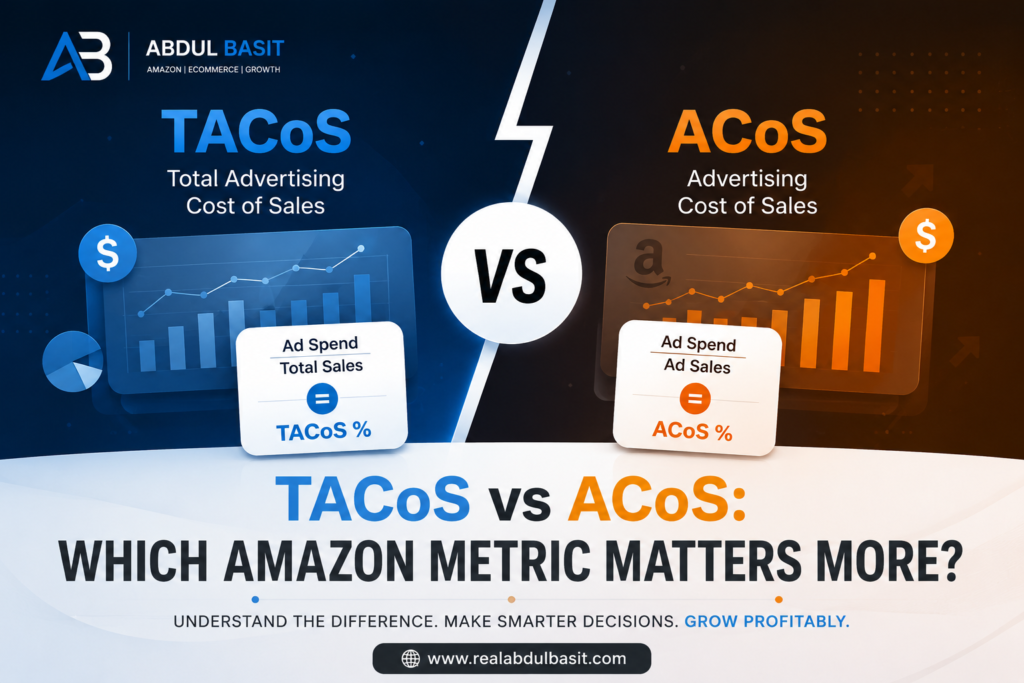
ACoS (Advertising Cost of Sales) measures how much you spend on advertising to generate sales directly from your ads.
Formula
ACoS = Ad Spend ÷ Ad Sales × 100
Example
Suppose:
- Ad Spend = $500
- Sales from Ads = $2,500
ACoS = ($500 ÷ $2,500) × 100 = 20%
This means you spent 20 cents on advertising for every $1 of revenue generated through PPC.
What Is TACoS?
TACoS (Total Advertising Cost of Sales) measures your advertising spend against total sales, including both advertising sales and organic sales.
Formula
TACoS = Ad Spend ÷ Total Sales × 100
Example
Suppose:
- Ad Spend = $500
- Total Sales = $8,000
TACoS = ($500 ÷ $8,000) × 100 = 6.25%
This gives you a broader view of how advertising contributes to the growth of your entire Amazon business.
TACoS vs ACoS: Quick Comparison
| Feature | ACoS | TACoS |
|---|---|---|
| Measures | Advertising Efficiency | Overall Business Efficiency |
| Uses Ad Sales Only | ✅ Yes | ❌ No |
| Includes Organic Sales | ❌ No | ✅ Yes |
| Best For | Campaign Optimization | Business Growth |
| Used Daily | Yes | Yes |
| Long-Term Indicator | Moderate | Excellent |
Why ACoS Can Be Misleading
Imagine two sellers.
Seller A
- ACoS: 15%
- TACoS: 18%
This seller relies heavily on advertising to generate sales.
Seller B
- ACoS: 25%
- TACoS: 7%
Although the ACoS is higher, the business generates strong organic sales, resulting in a much healthier TACoS.
Looking only at ACoS would suggest Seller A is performing better, but Seller B is actually building a stronger and more sustainable business.
Why TACoS Matters More for Long-Term Growth
Advertising should do more than generate immediate sales.
A well-managed PPC strategy can:
- Increase organic rankings
- Improve keyword visibility
- Boost sales velocity
- Generate more reviews
- Increase brand awareness
As organic sales grow, your TACoS should gradually decrease—even if your advertising spend stays the same.
This is one of the clearest signs that your Amazon business is becoming more efficient.
When Should You Focus on ACoS?
ACoS is essential when optimizing individual campaigns.
Monitor it to:
- Improve keyword performance
- Pause unprofitable ads
- Reduce wasted spend
- Test bidding strategies
- Compare campaign efficiency
If your ACoS is increasing while conversions remain flat, it’s time to review your PPC strategy.
When Should You Focus on TACoS?
TACoS becomes especially important when evaluating overall business growth.
Track it to understand:
- Whether PPC is improving organic sales
- If your brand is becoming less dependent on advertising
- Long-term profitability
- Growth over time
Successful Amazon brands often see TACoS decline as organic sales increase.
What Is a Good ACoS?
There isn’t one perfect number.
It depends on:
- Profit margins
- Product category
- Business goals
- Product lifecycle
General guidelines:
| Product Stage | Typical ACoS |
|---|---|
| Product Launch | 30–60% |
| Growth Phase | 20–35% |
| Established Product | 10–25% |
A higher ACoS during a launch can be acceptable if it helps build rankings and reviews.
What Is a Good TACoS?
Many established Amazon brands aim for:
- Under 15% – Healthy
- Under 10% – Excellent
- 5–8% – Often indicates strong organic performance
These benchmarks vary by category, pricing, and competition.
How to Reduce Both ACoS and TACoS
1. Improve Product Listings
Higher-converting listings reduce wasted ad spend.
Optimize:
- Product title
- Bullet points
- Images
- A+ Content
- Product description
2. Target High-Intent Keywords
Focus on keywords with:
- Strong conversion rates
- High relevance
- Buyer intent
Avoid spending heavily on broad, low-converting terms.
3. Increase Organic Rankings
Better rankings generate more free traffic.
Work on:
- SEO optimization
- Reviews
- Sales velocity
- Customer satisfaction
Related Article:
How Amazon Organic Ranking Works in 2026
4. Optimize PPC Campaigns
Review campaigns regularly.
Actions include:
- Add negative keywords
- Adjust bids
- Pause poor performers
- Increase bids on profitable keywords
Consistent optimization improves advertising efficiency.
5. Build a Brand
Brands often generate:
- Repeat purchases
- Branded searches
- Better customer loyalty
This naturally reduces TACoS over time.
Related Article:
Building an Amazon Brand That Survives Competition
Common Seller Mistakes
Avoid these common mistakes:
❌ Focusing only on ACoS
❌ Ignoring organic growth
❌ Measuring success by advertising sales alone
❌ Chasing the lowest possible ACoS
❌ Forgetting overall profitability
Remember, a very low ACoS isn’t always a sign of success if your business isn’t growing.
Real Example
Imagine you launch a new product.
Month 1
- ACoS: 45%
- TACoS: 35%
You’re investing heavily in visibility.
Month 6
- ACoS: 24%
- TACoS: 9%
Organic sales have increased, reducing your dependence on advertising.
This is exactly what successful Amazon sellers aim for.
Frequently Asked Questions
Which metric is more important: TACoS or ACoS?
Both are important. ACoS helps optimize individual advertising campaigns, while TACoS provides a broader view of overall business performance and long-term growth.
Can a high ACoS still be profitable?
Yes. During product launches or aggressive growth phases, a higher ACoS may be worthwhile if it leads to increased organic rankings and future sales.
What does a declining TACoS mean?
A declining TACoS usually indicates that organic sales are growing faster than advertising spend, which is a positive sign for your business.
Should I monitor TACoS daily?
It’s useful to review TACoS regularly, but it is most valuable for tracking trends over weeks or months rather than making daily campaign decisions.
How can I improve TACoS?
Improve your product listings, increase organic rankings, optimize PPC campaigns, and build a strong brand that attracts repeat customers.
Related Articles
Continue Learning:
- What Is TACoS in Amazon Advertising? Complete Beginner Guide
- The Real Difference Between ACoS, TACoS, and ROAS
- 10 Amazon PPC Mistakes That Increase TACoS in 2026
- Amazon Organic Ranking vs Sponsored Ranking Explained
- Amazon FBA AI Tools Every Seller Should Know
Need help optimizing your Amazon PPC campaigns and growing your brand?
👉 Contact Me:
https://realabdulbasit.com/contact/
External Resources
- Amazon Advertising Learning Console
- Amazon Seller University
- Amazon Ads Help Center
Final Verdict
There isn’t a single winner in the TACoS vs ACoS debate because both metrics serve different purposes.
Use ACoS to measure the efficiency of your advertising campaigns and make day-to-day optimization decisions.
Use TACoS to understand the bigger picture—how your advertising contributes to overall business growth and profitability.
The most successful Amazon sellers don’t focus on one metric alone. They monitor both, improve their listings, strengthen organic rankings, and build brands that rely less on paid advertising over time.
If your goal is long-term success on Amazon in 2026, track ACoS for campaign performance and TACoS for business growth.