Competitive Organic Rank on Amazon: What It Means and Why It Matters
One of the most important metrics Amazon sellers should monitor is their Competitive Organic Rank.
Many sellers focus heavily on PPC metrics such as ACOS, TACOS, and ROAS, but often overlook the metric that has the greatest long-term impact on profitability:
Organic ranking.
If your products rank organically for important keywords, you can generate sales without continuously increasing advertising spend.
That’s why understanding Competitive Organic Rank is essential for Amazon growth in 2026.
What Is Competitive Organic Rank on Amazon?
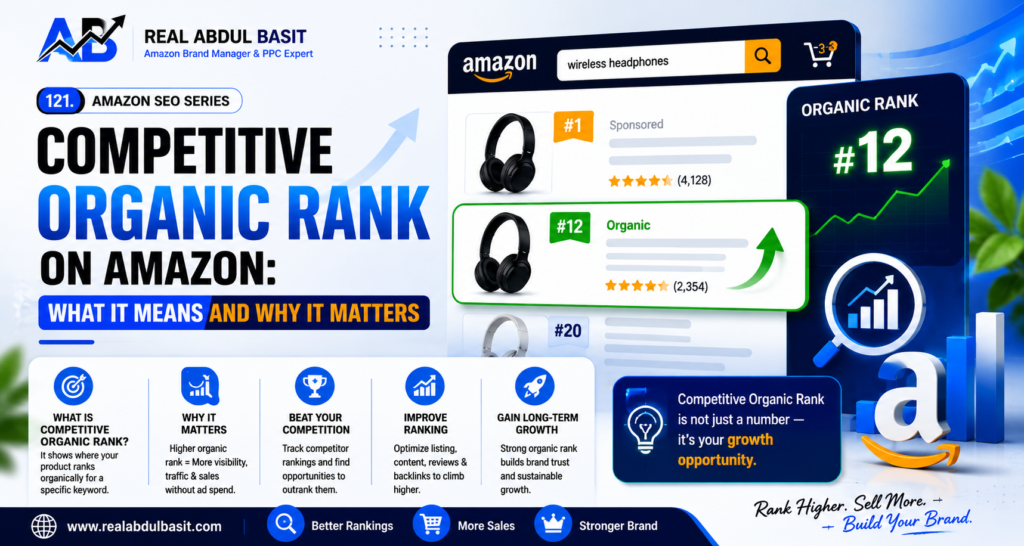
Competitive Organic Rank refers to your product’s position in Amazon’s organic search results compared to competing products targeting the same keyword.
For example:
If someone searches for:
“wireless earbuds”
and your product appears:
- Position #3 organically
- Position #8 organically
- Position #20 organically
That position is your organic rank for that keyword.
The more competitive the keyword, the more valuable a high ranking becomes.
Why Competitive Organic Rank Matters
Amazon shoppers rarely browse beyond the first page.
Studies consistently show that most purchases occur from products appearing near the top of search results.
Higher organic rankings typically result in:
- More impressions
- More clicks
- More sales
- Lower advertising dependency
- Better profitability
This is why successful sellers constantly monitor organic rank performance.
Organic Rank vs Sponsored Rank
Many sellers confuse these two metrics.
Organic Rank
Earned through:
- Sales velocity
- Conversion rates
- Customer satisfaction
- Relevance
Sponsored Rank
Achieved through:
- Amazon PPC bids
- Campaign budgets
- Advertising optimization
A product can appear:
- #2 Sponsored
- #25 Organic
Or:
- #1 Organic
- No sponsored placement
Understanding both rankings helps sellers evaluate overall visibility.
Why Amazon Cares About Organic Rankings
Amazon’s goal is simple:
Show products most likely to generate sales and satisfy customers.
The algorithm rewards products that consistently perform well.
Key ranking signals include:
- Conversion rate
- Sales history
- Keyword relevance
- Click-through rate
- Reviews
- Customer experience
Products that perform better tend to improve their organic rankings over time.
How Competitive Organic Rank Is Determined
Several factors influence organic positioning.
Keyword Relevance
Amazon must understand what your product is.
Relevant keywords should appear in:
- Product title
- Bullet points
- Description
- Backend search terms
Sales Velocity
Products generating frequent sales often rank higher.
Amazon sees strong sales activity as proof of demand.
Conversion Rate
If shoppers click your listing and buy, Amazon receives positive signals.
Higher conversion rates often lead to improved organic ranking.
Customer Satisfaction
Customer experience influences long-term rankings.
Amazon evaluates:
- Reviews
- Returns
- Refund rates
- Negative feedback
Why Competitive Keywords Are Different
Ranking for low-volume keywords is relatively easy.
Competitive keywords require stronger performance.
For example:
Easy Keyword
“blue silicone kitchen spatula”
Competitive Keyword
“kitchen spatula”
The second keyword has significantly more competition.
This is where Competitive Organic Rank becomes important.
How to Monitor Organic Rank
Every serious seller should monitor organic rank regularly.
Tracking allows you to identify:
- Ranking improvements
- Ranking declines
- Competitor movements
- PPC impact on rankings
Without tracking, optimization becomes guesswork.
Common Reasons Organic Rankings Drop
Reduced Sales Velocity
Fewer sales often lead to lower rankings.
Increased Competition
New competitors may outperform your listing.
Poor Conversion Rate
Traffic without purchases signals lower relevance.
Inventory Issues
Stockouts can severely damage organic rankings.
Listing Optimization Problems
Outdated listings may struggle to compete.
How to Improve Organic Ranking on Amazon
Many sellers ask:
“How do I improve organic ranking on Amazon?”
The answer involves improving overall product performance.
Optimize Product Listings
Focus on:
- Keyword-rich titles
- Better bullet points
- Improved images
- Enhanced A+ Content
Increase Conversion Rates
Better conversion rates help Amazon identify winning products.
Use PPC Strategically
Amazon PPC can generate:
- Traffic
- Sales velocity
- Ranking signals
Strong PPC campaigns often support organic ranking improvement.
Focus on Customer Experience
Satisfied customers leave positive reviews and generate repeat purchases.
These signals strengthen rankings over time.
The Relationship Between PPC and Organic Ranking
Many sellers wonder:
Can PPC improve organic rank?
Indirectly, yes.
PPC itself is not a ranking factor.
However, PPC-generated sales contribute to:
- Sales velocity
- Conversion history
- Keyword relevance signals
This can help products rank organically for competitive terms.
Real Example of Competitive Organic Rank
Imagine two products targeting:
“protein shaker bottle”
Product A
- Position #6 Organic
- Strong conversion rate
- High sales velocity
Product B
- Position #18 Organic
- Lower conversion rate
- Fewer sales
Product A is likely to continue outperforming Product B because Amazon sees stronger customer engagement.
Why Organic Rankings Reduce Advertising Costs
The higher your organic ranking, the less dependent you become on paid traffic.
Benefits include:
- Lower TACOS
- Better profitability
- More consistent sales
- Stronger business stability
This is why organic visibility remains one of the most valuable assets on Amazon.
Common Seller Mistakes
Focusing Only on PPC
Advertising alone cannot sustain growth forever.
Ignoring Conversion Optimization
Traffic without sales rarely improves rankings.
Not Monitoring Organic Rank
What gets measured gets improved.
Chasing Keywords Instead of Customers
Customer satisfaction remains the ultimate ranking factor.
Related Articles
You may also find these guides helpful:
- How Amazon Organic Ranking Works in 2026
- Why Your Amazon Product Is Not Ranking Organically
- Amazon Organic Ranking vs Sponsored Ranking Explained
- How I Improved Amazon Organic Rankings for a Competitive Product
- The Amazon Ranking Secret Nobody Talks About
Frequently Asked Questions
What is Competitive Organic Rank?
Competitive Organic Rank measures your position in Amazon’s organic search results relative to competing products targeting the same keyword.
Why is organic rank important?
Higher organic rankings increase visibility, clicks, and sales while reducing dependence on paid advertising.
How can I monitor organic rank?
You can use Amazon analytics tools and keyword tracking software to monitor ranking performance over time.
Can PPC improve organic ranking?
Indirectly, yes. PPC-generated sales can strengthen ranking signals and contribute to organic ranking improvement.
What is a good organic rank on Amazon?
Generally, rankings within the top 10 positions generate the majority of clicks and sales for a keyword.
Final Verdict
Competitive Organic Rank is one of the most important indicators of long-term Amazon success.
While PPC can generate immediate traffic, organic rankings create sustainable growth.
The sellers who consistently monitor organic rank, improve conversion rates, optimize listings, and deliver excellent customer experiences are the ones most likely to dominate competitive keywords.
In 2026, the ability to improve and maintain strong organic rankings will continue to separate average sellers from leading Amazon brands.