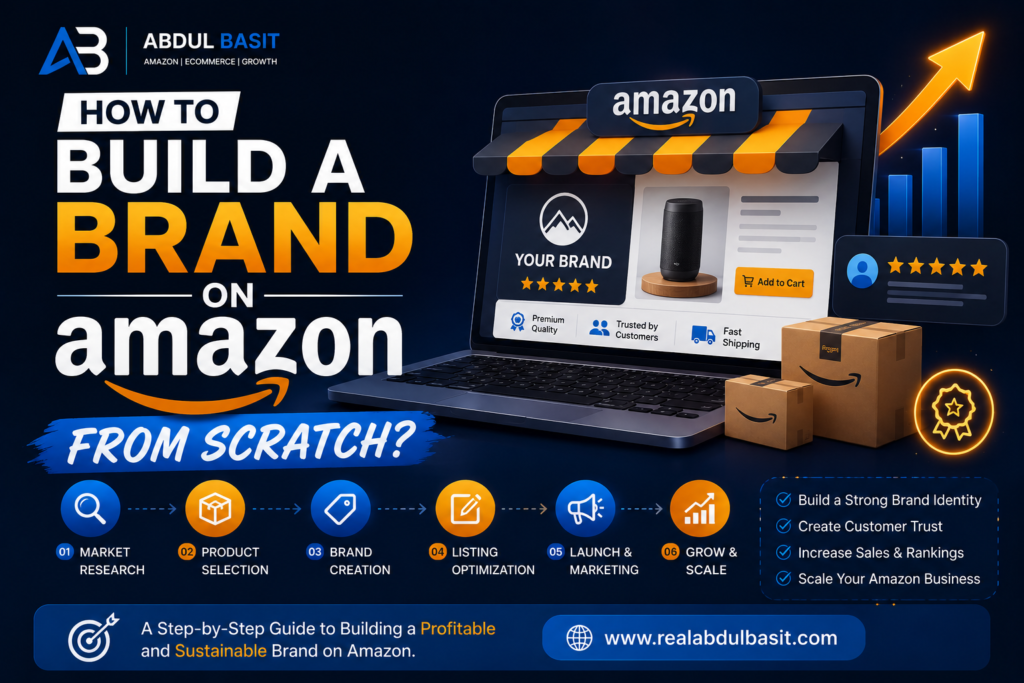
How to Build a Brand on Amazon From Scratch in 2026!
Starting an Amazon business is easier than ever. Building a successful brand that lasts is the real challenge.
Every year, thousands of new sellers launch products on Amazon. Unfortunately, many of them disappear within months because they focus only on making sales instead of building a brand.
A strong Amazon brand helps you stand out, earn customer trust, generate repeat purchases, and reduce your dependence on paid advertising.
In this guide, I’ll walk you through the exact process of building an Amazon brand from scratch in 2026. Whether you’re launching your first product or planning a long-term ecommerce business, these strategies will help you build a brand that can grow and survive increasing competition.
What Is an Amazon Brand?
An Amazon brand is more than a logo or product name.
It’s the complete experience customers have with your business.
A successful brand includes:
- High-quality products
- Consistent branding
- Professional packaging
- Customer trust
- Positive reviews
- Strong product listings
- Reliable customer support
Instead of selling random products, you’re building a business that customers remember.
Why Building a Brand Matters
Many sellers compete only on price.
That strategy rarely works for long.
A strong brand offers several advantages:
- Higher customer trust
- Better conversion rates
- More repeat purchases
- Improved organic rankings
- Reduced reliance on Amazon PPC
- Higher business value
Customers are more likely to buy from brands they recognize than from generic sellers.
Step 1: Choose the Right Niche
The foundation of every successful Amazon brand starts with choosing the right niche.
Look for products that have:
- Consistent demand
- Healthy profit margins
- Moderate competition
- Opportunities for improvement
Avoid selecting products simply because they’re trending.
Instead, focus on niches where you can provide long-term value.
Step 2: Understand Your Target Audience
Before creating a product, understand your ideal customer.
Ask yourself:
- Who will buy this product?
- What problems are they trying to solve?
- What features matter most to them?
- Why would they choose your brand?
Customer research helps you build products that people genuinely want.
Step 3: Create a Strong Brand Identity
Your brand identity should make your business memorable.
Focus on:
Brand Name
Choose a name that is:
- Easy to remember
- Easy to pronounce
- Relevant to your niche
Logo
A professional logo builds trust and credibility.
Brand Colors
Use consistent colors across:
- Product packaging
- Amazon Store
- Website
- Social media
Consistency strengthens brand recognition.
Brand Story
People connect with stories.
Explain:
- Why your brand exists
- Your mission
- The problem you solve
- Your commitment to customers
Step 4: Source High-Quality Products
Product quality determines your long-term success.
Poor products lead to:
- Negative reviews
- Refunds
- Higher advertising costs
- Lower rankings
Work with reliable suppliers and request samples before placing large orders.
Always prioritize quality over short-term savings.
Step 5: Register Your Brand
Amazon Brand Registry offers valuable tools for brand owners.
Benefits include:
- Brand protection
- A+ Content
- Sponsored Brands Ads
- Amazon Storefront
- Better analytics
Registering your brand helps protect your intellectual property and strengthens your presence on Amazon.
Step 6: Create Optimized Product Listings
Your listing should answer every question a customer might have.
Include:
SEO-Optimized Title
Naturally include your primary keyword.
Bullet Points
Focus on customer benefits rather than just features.
Product Description
Explain:
- What the product does
- Why it matters
- How it solves customer problems
High-Quality Images
Include:
- Lifestyle photos
- Infographics
- Product close-ups
- Size comparisons
Professional visuals increase conversion rates.
Step 7: Build Your Amazon Store
An Amazon Store creates a professional shopping experience.
Benefits include:
- Better brand visibility
- Product collections
- Cross-selling opportunities
- Improved customer trust
Think of it as your own online storefront within Amazon.
Step 8: Launch with Amazon PPC
Amazon PPC helps generate initial visibility.
Recommended campaign types:
Sponsored Products
Target high-intent keywords.
Sponsored Brands
Increase brand awareness.
Sponsored Display
Retarget interested shoppers.
Monitor key metrics like:
- ACoS
- TACoS
- ROAS
- CTR
- Conversion Rate
Optimize campaigns regularly instead of relying on automation alone.
Step 9: Focus on Organic Rankings
Paid ads generate traffic, but organic rankings create long-term profitability.
Improve your rankings by:
- Optimizing keywords
- Increasing conversion rates
- Delivering excellent customer experiences
- Generating consistent sales
- Encouraging genuine customer reviews
The stronger your organic visibility, the less you’ll rely on advertising.
Step 10: Deliver an Exceptional Customer Experience
Satisfied customers become loyal customers.
Improve:
- Product quality
- Packaging
- Instructions
- Customer support
Excellent service often results in better reviews and repeat purchases.
Step 11: Expand Your Product Line
Once your first product succeeds, expand within the same niche.
For example:
A kitchen brand might add:
- Storage containers
- Food preparation tools
- Kitchen accessories
Selling complementary products increases customer lifetime value.
Common Branding Mistakes
Avoid these common mistakes:
❌ Choosing products based only on trends
❌ Competing solely on price
❌ Ignoring customer feedback
❌ Poor product photography
❌ Weak product listings
❌ Overreliance on PPC
❌ Launching unrelated products
Building a brand requires patience and consistency.
Benefits of Building an Amazon Brand
- Strong customer trust
- Higher conversion rates
- Better organic rankings
- Increased repeat purchases
- Improved profitability
- Long-term business value
- Easier product launches
A recognizable brand becomes one of your greatest competitive advantages.
Frequently Asked Questions
Can I build an Amazon brand with one product?
Yes. Many successful Amazon brands started with a single product before expanding into related categories.
Is Amazon Brand Registry necessary?
While it’s not required to sell on Amazon, Brand Registry provides valuable tools that help protect and grow your brand.
How long does it take to build an Amazon brand?
Building a successful brand takes time. Consistent effort over several months can establish strong foundations, while long-term success often develops over years.
Should I create a website for my Amazon brand?
Yes. Having your own website helps build credibility, supports your brand identity, and creates opportunities beyond Amazon.
Is branding more important than advertising?
Both are important. Advertising generates visibility, while branding builds trust and encourages repeat purchases. Together, they create sustainable growth.
Related Articles
Continue Learning:
- Building an Amazon Brand That Survives Competition
- Product Branding vs Product Selling on Amazon
- How Amazon Organic Ranking Works in 2026
- TACoS vs ACoS: Which Amazon Metric Matters More?
- Amazon FBA AI Tools That Save Time and Increase Profit
External Resources
- Amazon Brand Registry
- Amazon Seller University
- Amazon Advertising Learning Console
- USPTO Trademark Search (for trademark research)
Need Help Building Your Amazon Brand?
Whether you’re launching your first product or scaling an existing business, a clear strategy can save time, reduce costly mistakes, and accelerate growth.
👉 Contact me for Amazon FBA consulting and brand growth strategies:
Final Verdict
Building an Amazon brand from scratch isn’t about finding a single winning product.
It’s about creating a business customers trust.
By choosing the right niche, understanding your audience, investing in quality, optimizing your listings, and building a memorable brand identity, you create a foundation for long-term success.
Competition will continue to increase in 2026, but strong brands will always have an advantage over generic sellers.
Start with one great product, focus on delivering value, and build a brand that customers return to again and again.