
Running Amazon PPC ads in 2026 is very different from what it was a few years ago.
Clicks are more expensive. Competition is tougher. And if your campaigns are not optimized properly, Amazon will burn through your budget faster than ever.
I’ve seen sellers spend hundreds — sometimes thousands — of dollars on PPC while barely making profitable sales. Most of the time, the problem is not the product itself.
The real issue is poor campaign structure, weak keyword targeting, and a lack of optimization.
The good news is that most PPC mistakes are fixable.
In this article, I’ll break down the most common Amazon PPC mistakes I see sellers make constantly — and how to improve your ACOS without destroying your rankings.
Why Amazon PPC Matters More in 2026
Organic ranking alone is no longer enough for most products.
Amazon’s marketplace has become heavily pay-to-play.
PPC helps with:
- visibility
- ranking
- sales velocity
- keyword indexing
- brand awareness
But PPC should not feel like gambling.
A properly optimized campaign gives you:
- better conversions
- lower wasted spend
- stronger keyword data
- improved profitability
The goal is not just getting clicks.
The goal is profitable growth.
Mistake #1 — Targeting Too Many Broad Keywords
One of the biggest beginner mistakes is running ads with extremely broad targeting.
For example:
- “water bottle”
- “phone case”
- “protein shaker”
These keywords usually:
- cost more
- attract mixed buyer intent
- waste budget quickly
- have intense competition
New sellers often think:
“More traffic means more sales.”
Not necessarily.
Sometimes more traffic simply means more wasted clicks.
What I Do Instead
I focus heavily on:
- long-tail keywords
- buyer-intent keywords
- highly relevant search terms
For example, instead of:
- “desk lamp”
I’d rather target:
- “adjustable LED desk lamp for home office”
These keywords usually:
- convert better
- cost less
- attract serious buyers
Smaller traffic with better intent is often more profitable.
Mistake #2 — Ignoring Search Term Reports
This is one of the most expensive mistakes sellers make.
Amazon gives valuable PPC data, but many people never analyze it properly.
Your search term report shows:
- what customers actually typed
- which keywords convert
- which terms waste money
If you ignore this data, you’re basically advertising blind.
What I Look For in Search Term Reports
I regularly check for:
- high-spend keywords with no conversions
- profitable converting terms
- irrelevant clicks
- hidden keyword opportunities
This helps me:
- pause bad keywords
- increase bids on winners
- improve targeting
- reduce wasted spend
Small optimizations make a huge difference over time.
Mistake #3 — Not Using Negative Keywords
Negative keywords are one of the most underrated PPC tools.
Without them, Amazon may show your ads for:
- irrelevant searches
- low-intent buyers
- completely unrelated terms
That drains your budget quickly.
Example
Imagine you sell:
- premium leather wallets
But your ads appear for:
- “cheap wallets”
- “kids wallets”
- “wallet accessories”
Those clicks are unlikely to convert.
That’s wasted money.
My Negative Keyword Strategy
I constantly add:
- irrelevant search terms
- low-converting phrases
- bargain-hunter keywords
- unrelated product variations
This improves:
- targeting accuracy
- click quality
- conversion rates
- ACOS performance
Negative keywords are essential for efficient scaling.
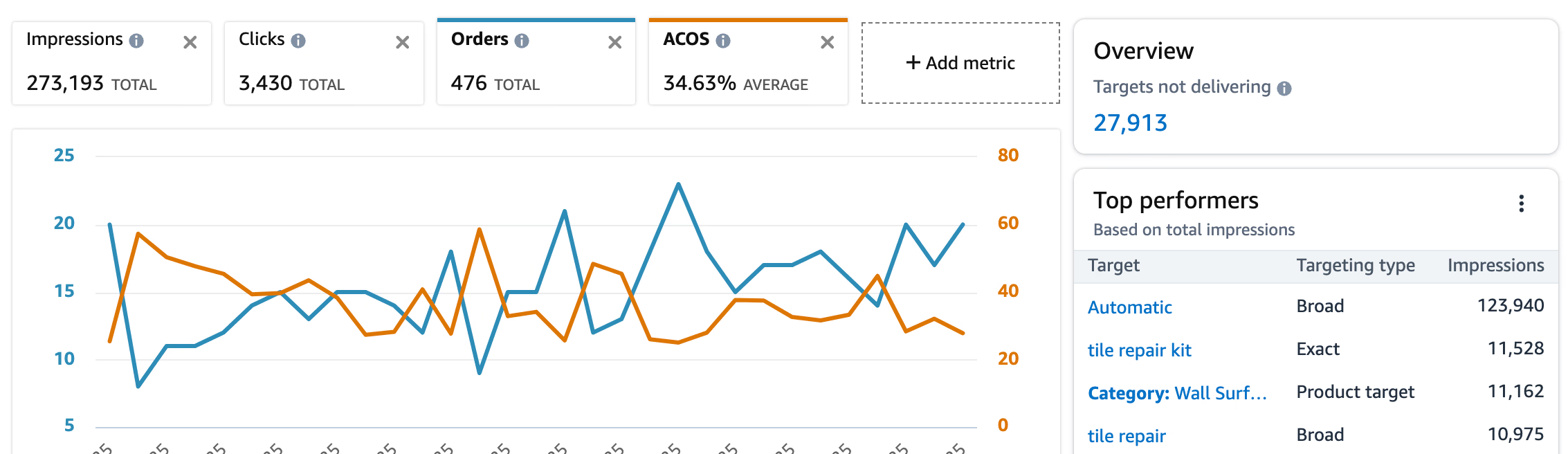
Mistake #4 — Focusing Only on Low ACOS
Many sellers obsess over ACOS without understanding the bigger picture.
Yes, ACOS matters.
But sometimes a slightly higher ACOS is acceptable if:
- ranking improves
- organic sales increase
- product visibility grows
- customer lifetime value is strong
A campaign can have:
- “perfect ACOS”
- but terrible growth
That’s not always healthy for scaling.

Understanding ACOS Properly
ACOS simply means:
Advertising Spend ÷ Ad Revenue
ACOS=\frac{Advertising\ Spend}{Ad\ Revenue}\times100
Lower is not automatically better.
The real goal is:
- profitable growth
- sustainable scaling
- strong total account performance
Sometimes aggressive PPC is necessary during launches.
Mistake #5 — Sending Traffic to Weak Listings
This is huge.
Even perfect PPC cannot save a weak product listing.
If your:
- images look cheap
- title is confusing
- reviews are weak
- bullets are poorly written
then PPC becomes extremely expensive.
Why?
Because your conversion rate suffers.
And when conversion rates drop:
- Amazon charges more per sale
- rankings weaken
- ACOS increases
Before Scaling PPC, I Always Optimize:
Product Images
They must look premium and trustworthy.
Main Keyword Placement
The title should clearly communicate the product.
Benefits
Customers care about outcomes, not features.
Social Proof
Reviews heavily influence conversions.
PPC and listing optimization always work together.
Mistake #6 — Using One Campaign for Everything
A lot of sellers throw:
- broad match
- phrase match
- exact match
- auto campaigns
into one messy campaign.
That creates poor data clarity.
You can’t optimize properly when everything is mixed together.
My Campaign Structure
I usually separate campaigns based on:
- keyword type
- match type
- intent level
- performance stage
For example:
- Auto Campaign
- Broad Research Campaign
- Exact Match Campaign
- Brand Defense Campaign
- Competitor Campaign
This gives cleaner data and better optimization control.
Mistake #7 — Making Emotional Bid Decisions
Many sellers panic when:
- sales slow down
- ACOS rises temporarily
- clicks become expensive
Then they:
- slash bids randomly
- pause campaigns too early
- constantly change settings
That usually hurts performance even more.
Amazon PPC needs:
- testing
- patience
- data interpretation
Not emotional reactions.
What I Focus on Instead
I look at trends over time:
- conversion rate
- click-through rate
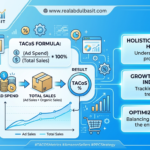
- TACOS
- keyword profitability
- organic ranking growth
Sometimes campaigns need time before becoming profitable.
Optimization is a process, not a one-day fix.
My Personal PPC Optimization Workflow
Here’s the simplified workflow I follow regularly:
Step 1 — Analyze Search Terms
Find winners and wasted spend.
Step 2 — Add Negative Keywords
Block irrelevant traffic.
Step 3 — Increase Bids on Converting Keywords
Push profitable terms harder.
Step 4 — Reduce Spend on Poor Performers
Trim waste carefully.
Step 5 — Improve Listing Conversion Rate
Better listings reduce ACOS naturally.
Step 6 — Monitor Organic Ranking
PPC should support long-term ranking growth.
The Truth About Amazon PPC in 2026
Amazon PPC is no longer simple.
But it’s still one of the most powerful growth tools available for sellers.
The sellers winning today are not just spending more money.
They’re:
- optimizing smarter
- understanding customer intent
- improving conversions
- using data strategically
That’s the real difference.
Final Thoughts
Most Amazon PPC problems come from poor structure, weak targeting, and lack of optimization discipline.
The goal is not just lowering ACOS.
The goal is building a profitable system that scales consistently.
My advice is simple:
Stop treating PPC like a shortcut.
Treat it like a real marketing engine.
Because when optimized properly, Amazon PPC can become one of the biggest growth drivers in your entire business.