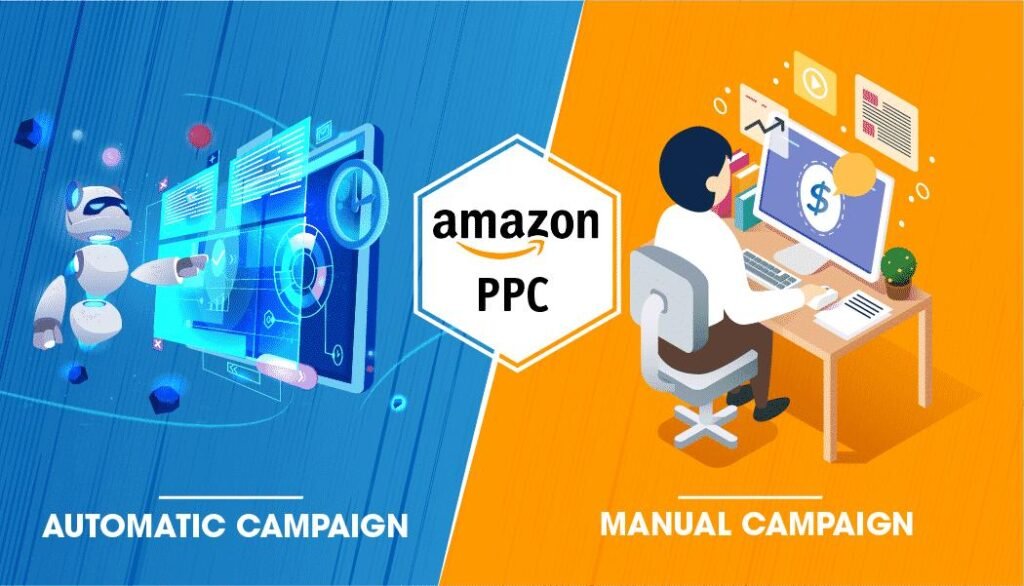
Amazon PPC has become more competitive than ever in 2026.
Costs are rising.
Competition is growing.
At the same time, sellers now have access to powerful AI advertising tools that promise:
- automatic optimization
- lower ACOS
- smarter bidding
- faster scaling
- less manual work
Because of this, many sellers are asking an important question:
Is AI actually better than manual Amazon PPC management?
The answer is not as simple as most people think.
AI tools are improving rapidly. However, human strategy still matters heavily.
The best results usually come from combining:
- AI automation
- human decision-making
- conversion optimization
- customer psychology
- business strategy
In this article, I’ll compare AI PPC automation vs manual campaign management and explain what actually works best for Amazon sellers today.
Why Amazon PPC Became So Complex
Years ago, Amazon PPC was much easier.
Sellers could:
- launch simple campaigns
- bid aggressively
- rank products quickly
without deep optimization.
That is no longer the case.
Today, sellers deal with:
- expensive CPCs
- crowded keywords
- aggressive competitors
- constant bid changes
- complex analytics
Managing campaigns manually now takes far more time than before.
That is one reason AI automation tools became popular.
What AI PPC Tools Actually Do
AI-powered PPC software mainly focuses on automation and data analysis.
These tools can help sellers:
- adjust bids automatically
- analyze search terms
- detect wasted spend
- optimize keyword targeting
- improve budget allocation
- monitor campaign performance
The goal is improving efficiency while reducing manual work.
Why Many Sellers Like AI PPC Automation
The biggest advantage is speed.
AI tools can process huge amounts of data much faster than humans.
Instead of manually checking campaigns for hours, automation systems can react quickly to:
- performance changes
- bid fluctuations
- keyword trends
- conversion signals
This saves a lot of time.
AI Helps Reduce Repetitive PPC Work
One of the most frustrating parts of Amazon PPC is repetitive optimization.
Sellers constantly need to:
- adjust bids
- add negatives
- monitor search terms
- analyze ACOS
- pause weak keywords
AI tools help automate many of these tasks.
That improves operational efficiency significantly.
Where AI Performs Very Well
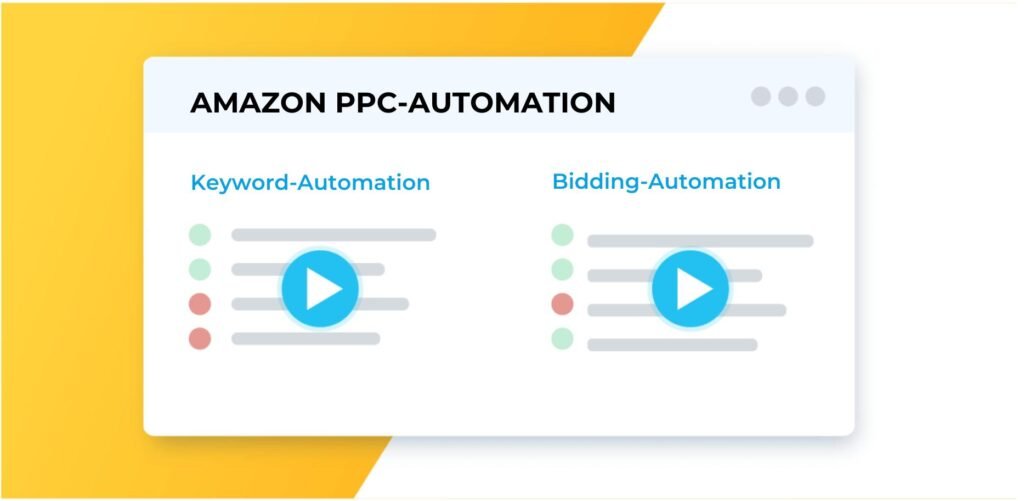
AI automation usually works best for:
- bid optimization
- data processing
- search term analysis
- budget adjustments
- rule-based optimization
These are highly repetitive tasks.
Machines handle repetitive systems extremely well.
Why AI Is Helpful for Large Accounts
For large Amazon brands managing:
- hundreds of campaigns
- thousands of keywords
- massive budgets
manual management becomes difficult.
AI helps organize complexity faster.
That allows teams to focus more on:
- scaling
- strategy
- product growth
instead of endless spreadsheet analysis.
The Biggest Problem With AI PPC Tools
Many sellers expect AI to completely replace strategic thinking.
That rarely works.
AI tools optimize based on data patterns.
However, they do not fully understand:
- customer emotions
- branding
- market positioning
- launch strategies
- product differentiation
That is where human judgment still matters heavily.
Manual PPC Management Still Has Advantages
Experienced PPC managers often notice things AI misses.
Humans can better understand:
- buyer psychology
- niche behavior
- branding impact
- competitor positioning
- seasonal intent shifts
Good marketers think beyond numbers alone.
Why Human Strategy Still Matters
Amazon advertising is not only about reducing ACOS.
It is also about:
- ranking products
- scaling launches
- defending brand visibility
- increasing lifetime value
- improving market share
Sometimes aggressive campaigns make strategic sense even if short-term ACOS looks worse.
AI systems may not always understand those broader business goals.
AI Can Sometimes Over-Optimize
This is an important issue.
Some automation systems become too focused on efficiency metrics like:
- low ACOS
- reduced CPCs
- strict profitability
However, aggressive optimization can sometimes hurt:
- organic ranking
- keyword expansion
- scaling opportunities
Growth often requires balancing:
- profitability
- visibility
- ranking momentum
Humans usually understand this balance better.
The Best PPC Results Usually Combine Both
In my opinion, the strongest Amazon PPC systems combine:
- AI automation
- human oversight
- strategic decision-making
That combination creates both:
- operational efficiency
- strategic flexibility
This is where many advanced sellers are heading in 2026.
How I Personally View AI PPC Tools
I see AI as a productivity multiplier.
Not a replacement for expertise.
AI can dramatically improve:
- speed
- organization
- optimization workflows
- reporting
- data analysis
However, strong PPC still depends heavily on:
- experience
- strategy
- customer understanding
- market awareness
The seller still matters more than the software.
Where Manual PPC Usually Wins
Manual optimization often performs better when:
- launching new products
- testing aggressive ranking strategies
- entering unusual niches
- handling complex branding decisions
- reacting to emotional buyer behavior
Humans are still better at interpreting context.
Where AI Usually Wins
AI tools often outperform humans in:
- repetitive bid adjustments
- large-scale campaign monitoring
- data organization
- automation efficiency
- detecting trends quickly
Especially at scale.
Why Conversion Rate Still Matters More Than PPC Alone
This is something many sellers forget.
Even the best PPC campaigns struggle if:
- listings convert poorly
- images look weak
- reviews are bad
- branding feels generic
PPC works best when the full listing ecosystem is optimized.
That includes:
- SEO
- conversion optimization
- reviews
- product quality
Advertising alone cannot fix weak fundamentals.
PPC Automation Does Not Replace Amazon SEO
Organic ranking still matters heavily.
In fact, strong organic rankings usually reduce PPC dependence over time.
That is why sellers should still focus on:
- keyword optimization
- listing quality
- click-through rates
- customer satisfaction
You can also improve long-term visibility by learning more from resources like Amazon Ads Learning Console and Search Engine Journal SEO Guides.
Understanding both PPC and SEO creates stronger growth systems.
Common PPC Automation Mistakes
1. Fully Trusting Automation Without Oversight
AI tools still require monitoring.
Blind automation can create expensive problems.
2. Focusing Only on ACOS
Low ACOS alone does not guarantee business growth.
Visibility and ranking also matter.
3. Ignoring Conversion Optimization
Weak listings reduce PPC performance heavily.
4. Using Too Many Automated Rules
Overcomplicated systems can create unstable campaigns.
Simple structures often work better.
5. Expecting Instant Results
Even AI-driven PPC still requires testing and optimization over time.
What Actually Works in 2026
The Amazon sellers performing best today usually combine:
- strategic PPC
- AI automation
- strong branding
- conversion optimization
- organic ranking systems
Everything supports everything else.
That creates long-term profitability.
Final Thoughts
AI-powered PPC automation is becoming extremely powerful in 2026.
It can save time, improve efficiency, and simplify campaign management.
However, AI still works best as a tool — not a complete replacement for human strategy.
The strongest Amazon sellers are usually the ones combining:
- automation
- experience
- customer psychology
- smart decision-making
Because at the end of the day, successful Amazon PPC is not only about data.
It is about understanding buyers better than competitors do.